
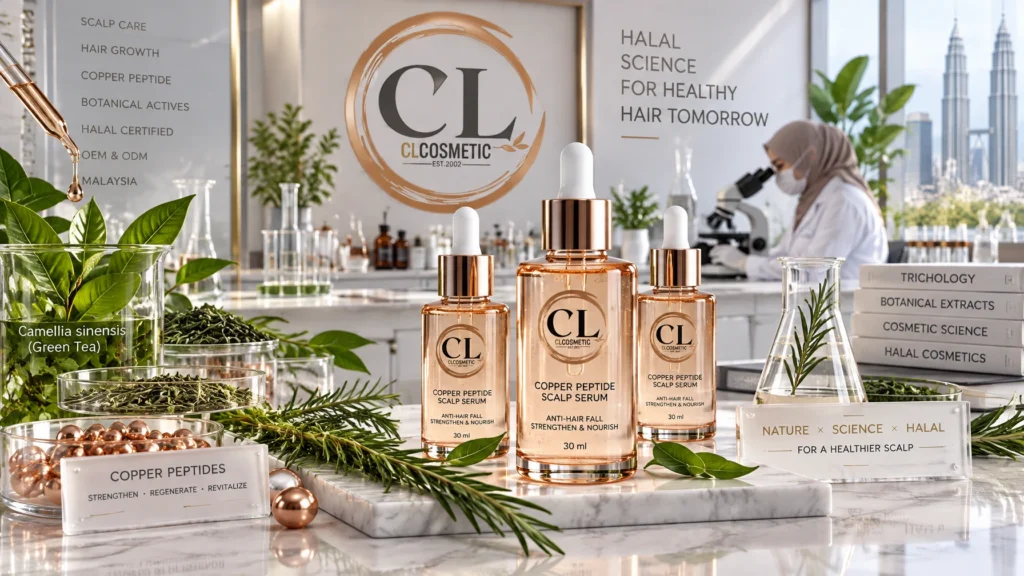
The global personal care market is experiencing a massive category shift in 2026. The traditional hair care industry, which once focused almost entirely on superficial hair shaft conditioning, has shifted its focus to the biological foundation of healthy hair growth: the scalp barrier. Driven by the “Scalp Skinification” movement, modern consumers across Southeast Asia now treat their scalp with the same sophisticated active ingredients, care, and diagnostic attention traditionally reserved for facial skin.
In tropical climates like Malaysia, Singapore, and Indonesia, high ambient humidity, intense heat, sweat accumulation, and daily pollution create a challenging micro-environment for scalp health. Common issues such as excess sebum production, follicle clogging, micro-inflammation, itchy flaking, and premature hair thinning are widespread. Furthermore, for the millions of Muslim women wearing the Hijab daily, covered scalps experience higher localized heat and moisture retention, amplifying the need for specialized Halal Scalp Care solutions.
Consumers are actively abandoning harsh, drying anti-dandruff shampoos and alcohol-heavy hair tonics. Instead, they demand dermatologically validated, leave-on Halal Scalp Care serums, pre-shampoo liquid exfoliants, and microbiome-balancing root tonics.
For beauty brand founders, salon lines, and wellness entrepreneurs, entering the Halal Scalp Care sector represents a high-margin, recurring revenue opportunity. However, formulating an anti-hair fall serum that penetrates deeply into the follicle without leaving a greasy residue or violating Shariah standards requires advanced biochemical expertise.
Located in Kajang, Selangor, the contract manufacturing experts at CL Cosmetic have created this definitive B2B guide. Below is your strategic blueprint for formulating, certifying, and launching a high-performance Halal Scalp Care anti-hair fall line in 2026.
Scalp Skinification vs Traditional Hair Care: The 2026 Shift
Understanding the fundamental difference between legacy hair care products and modern Halal Scalp Care formulations is essential for brand positioning, consumer trust, and commercial success.
[Traditional Hair Care] ➔ Focuses on Hair Shaft ➔ Heavy Oils & Sulfates ➔ Clogs Follicles & Weighs Down Hair
VS
[Modern Halal Scalp Care] ➔ Focuses on Follicle Root ➔ Biomimetic Peptides & Postbiotics ➔ Stimulates Growth & Balances Microbiome
1. Target Biology
Traditional hair care products focus almost exclusively on smoothing the dead keratinized cells of the hair strand using synthetic silicones and heavy waxes. In contrast, modern Halal Scalp Care targets the living dermal papilla cells, hair follicle stem cells, and the resident scalp microbiome. By nourishing the living skin of the scalp, these formulations address the root biological cause of premature hair shedding.
2. Formative Texture and Weight
In humid tropical climates, heavy plant oils and oily hair tonics trap sweat and environmental pollutants against the scalp. This causes sebum oxidation and follicle blockage. Advanced Halal Scalp Care serums utilize weightless, water-based, or liposomal delivery vehicles that absorb within seconds, leaving zero greasy residue on the hair roots.
3. Alcohol and Chemical Safety
Legacy hair tonics relied on high concentrations of denatured ethyl alcohol (ethanol) to create a cooling sensation and force quick drying. However, alcohol severely dehydrates the scalp barrier, triggering rebound oiliness and severe irritation. Certified Halal Scalp Care relies on bio-based, alcohol-free glycols that hydrate the scalp mantle while maintaining strict Shariah compliance.
Brand owners seeking deeper analytical insights into regional consumer trends can explore our report on 7 Winning Scalp Care OEM Malaysia Breakthroughs in 2026.
Biochemical Causes of Hair Shedding in Tropical Climates
To develop a high-efficacy Halal Scalp Care serum, your formulation must target the underlying biological mechanisms that cause hair follicle miniaturization and premature hair loss (telogen effluvium).
1. Dihydrotestosterone (DHT) and 5-Alpha Reductase
Systemic or localized testosterone is converted into Dihydrotestosterone (DHT) by the enzyme 5-alpha reductase. DHT binds to androgen receptors in the dermal papilla, restricting blood microcirculation and shrinking the hair follicle over time until the hair strand falls out.
2. Scalp Microbiome Dysbiosis
High ambient humidity and sweat accumulation disrupt the natural acidic mantle of the scalp. Opportunistic yeast species, primarily Malassezia globosa, feed on excess sebum, releasing inflammatory free fatty acids. This triggers localized micro-irritation, flaking, and follicular weakening.
3. Stress-Induced Cortisol Damage
Lifestyle stress and environmental factors trigger localized cortisol release within cutaneous scalp tissue. High cortisol levels destroy structural extracellular matrix proteins (collagen and fibronectin) around the hair bulb, pushing follicles prematurely from the active growth phase (anagen) into the shedding phase (telogen).
By partnering with an experienced personal care OEM manufacturer, brand owners can engineer multi-target formulas that neutralize DHT, restore microbiome balance, and reduce cortisol-induced follicle stress.
Key Active Ingredients for Anti-Hair Fall Serums
Modern consumers demand evidence-based active ingredients backed by clinical trials. When designing custom Halal Scalp Care formulations at our Kajang R&D facility, our cosmetic chemists incorporate four primary active categories:
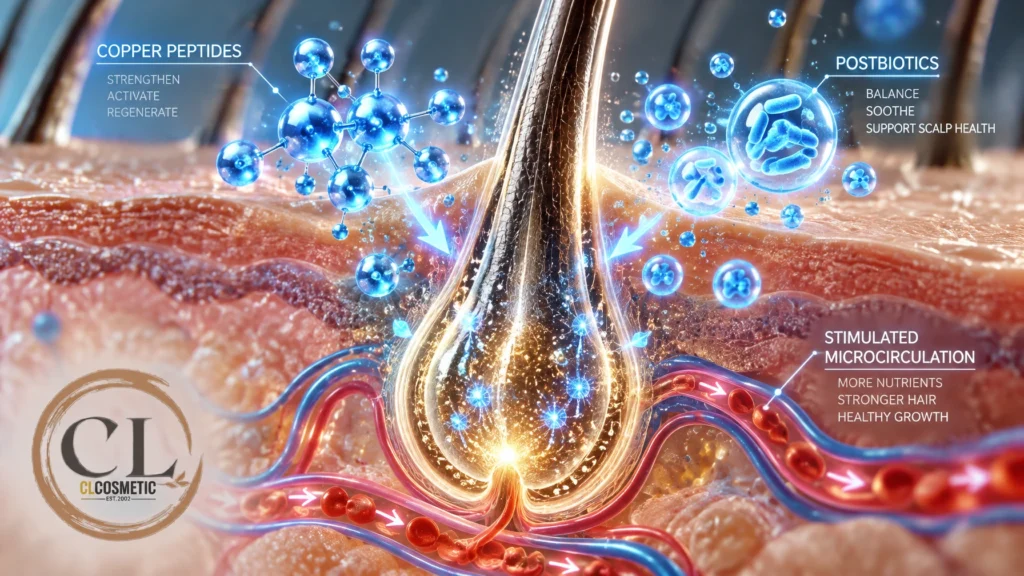
1. Copper Tripeptide-1 (GHK-Cu)
Copper Tripeptide-1 is a naturally occurring biomimetic peptide that has crossed over from facial anti-aging skincare into high-performance hair care. Clinical studies documented on the National Center for Biotechnology Information (NCBI) confirm that GHK-Cu stimulates vascular endothelial growth factor (VEGF) synthesis. This process expands follicle size, increases cutaneous blood flow to the hair bulb, and securely anchors the hair shaft within the dermis.
2. Redensyl & Capixyl Botanical Complexes
Patented plant-derived growth complexes offer strong, non-pharmaceutical alternatives to traditional prescription hair treatments:
- Redensyl (Dihydroquercetin-Glucoside & EGCG2): Targets hair follicle stem cells to reactivate the initiation phase of hair growth.
- Capixyl (Acetyl Tetrapeptide-3 + Red Clover Extract): Inhibits 5-alpha reductase enzyme activity, reducing DHT formation while strengthening the extracellular matrix anchoring the hair root.
3. Salicylic Acid (BHA 1.0% to 2.0%)
Unlike coarse physical scalp scrubs that create micro-tears on sensitive skin, Salicylic Acid provides gentle chemical exfoliation. Being oil-soluble, Salicylic Acid penetrates directly into the hair follicle pore, dissolving hardened sebum plugs, dead keratinized cells, and styling polymer buildup to ensure maximum active absorption.
4. Postbiotics (Lactobacillus Ferment) & Micro-Encapsulated Caffeine
Incorporating postbiotics restores the scalp’s natural pH (4.5 to 5.5), suppressing harmful fungal growth. Concurrently, micro-encapsulated caffeine penetrates the hair root within two minutes of application, neutralizing the negative effects of cortisol and boosting cellular ATP production.
To learn more about integrating advanced biotechnology into custom formulations, review our technical guide on Biotech Actives: Strategic Integration for Brand Differentiation in Manufacturing.
Formulating Alcohol-Free Halal Scalp Serums
Formulating an effective, leave-on Halal Scalp Care tonic without ethyl alcohol requires specialized cosmetic chemistry. In traditional hair care manufacturing, ethanol was widely used as a cheap solvent to dissolve water-insoluble actives and force fast drying.
However, high ethanol content causes severe barrier dehydration, triggers stinging on sensitive scalps, and creates Shariah compliance concerns for Muslim consumers.
An advanced contract manufacturer overcomes these challenges using bio-based formulation alternatives:
- Bio-Propanediol (Corn-Derived): Replaces ethyl alcohol as a lightweight, non-sticky solvent. It enhances active ingredient penetration into the follicle pore while actively boosting scalp hydration.
- Ethoxydiglycol & Isopentyldiol: High-purity glycol carriers that transport oil-soluble botanical extracts directly into lipid-rich dermal layers without disturbing the delicate skin barrier.
- Liposomal Encapsulation Technology: Microscopic phospholipid spheres encapsulate lipid-soluble actives (such as Vitamin E or Saw Palmetto extract). Upon application, these liposomes fuse with dermal cell membranes, transporting nutrients deep into the follicle root while leaving the outer skin surface dry, refreshed, and weightless.
To see how advanced barrier preservation applies across all personal care categories, read our published standards on Barrier-First Creams: 7 Proven Ingredient Standards for Superior Dermal Repair.
JAKIM Halal and NPRA Quest3+ Regulatory Compliance
For beauty brands targeting major consumer markets across Malaysia, Indonesia, Singapore, and the GCC, securing official Halal certification is essential for commercial success.
To obtain an official Halal logo from the Department of Islamic Development Malaysia (JAKIM), your Halal Scalp Care line must fulfill the strict criteria of the HAS 20800 Halal Assurance System.
1. Alcohol-Free Botanical Extractions
Many natural botanical extracts used in commercial hair care rely on ethyl alcohol as an extraction solvent. A certified OEM audits every raw material supplier to guarantee that all botanical actives use cold-press, supercritical $CO_2$, or glycerin extraction methods.
2. Elimination of Porcine and Non-Halal Animal Derivatives
All lipid carriers, fatty acids, and glycerin used in our Halal Scalp Care formulas are audited to ensure 100% plant or bio-fermented origin, completely excluding non-dhabihah animal derivatives.
3. Certified GMP Manufacturing Facilities
At CL Cosmetic Industries, all hair and scalp care production takes place in NPRA-certified Good Manufacturing Practice (GMP) cleanrooms. Automated stainless steel mixing homogenizers undergo certified Sertu (ritual cleansing) protocols, guaranteeing zero cross-contamination.
Furthermore, our regulatory team manages the complete submission process with the National Pharmaceutical Regulatory Agency (NPRA), compiling the Product Information File (PIF) and securing Quest3+ product notifications prior to commercial filling.
Discover how our certified facility infrastructure empowers growing brands in Building Market Resilience: The JAKIM Halal Manufacturing Advantage for 2026.
Active Ingredient Comparison Matrix for Halal Scalp Care
To assist brand owners in selecting the ideal active combination for their target price point and marketing claims, the comparative matrix below outlines key ingredient attributes:
| Active Ingredient | Primary Target Mechanism | Primary Functional Benefit | Recommended Product Format | Halal & Regulatory Status |
| Copper Tripeptide-1 | Vascular Endothelial Growth Factor (VEGF) | Expands follicle size; anchors hair bulb | Leave-On Scalp Growth Serum | Biomimetic origin; 100% Halal |
| Redensyl Complex | ORC Stem Cell Activation | Reactivates hair growth cycle initiation | Intensive Root Treatment Dropper | Botanical origin; Halal certified |
| Salicylic Acid (BHA) | Follicular Sebum Plugs | Dissolves lipid buildup & clears pores | Pre-Shampoo Clarifying Tonic | Synthetic origin; Halal compliant |
| Lactobacillus Ferment | Scalp Acid Mantle (pH 4.5-5.5) | Restores microbiome; calms flaking | Soothing Post-Wash Scalp Mist | Bio-fermentation; Halal certified |
| Bio-Propanediol | Stratum Corneum Carrier | Alcohol-free solvent; enhances absorption | All Scalp Serum Formulations | Corn-derived; Halal certified |
| Micro-Caffeine | Follicular ATP Stimulation | Neutralizes DHT & cortisol damage | Daily Anti-Hair Shedding Tonic | Plant-derived; Halal certified |
In-House Laboratory vs OEM Manufacturing: Commercial ROI Analysis
Attempting to formulate active scalp care products in uncertified facilities presents significant commercial risks. Inadequate preservation in water-based scalp tonics leads to bacterial growth, while unstable active complexes can cause severe scalp stinging and customer complaints.
Partnering with an established contract manufacturer like CL Cosmetic Industries eliminates operational risk and provides a clear commercial advantage:
| Commercial Metric | In-House / Uncertified Facility | CL Cosmetic OEM Partnership |
| Active Formula Stability | Unstable (High risk of peptide degradation) | Highly reliable (Liposomal encapsulation) |
| JAKIM Halal Certification | Complex & multi-year facility auditing | Immediate access to certified cleanrooms |
| Microbial Safety | High Risk (Prone to mold & bacteria) | Tested via USP 51 Microbial Challenge/equivalents |
| Initial Capital Investment | High (RM 1.5M+ facility equipment) | Low (Flexible starting order tiers) |
| NPRA Quest3+ Filing | High risk of regulatory delays | Turnkey regulatory notification |
By leveraging our established R&D infrastructure, brand owners eliminate trial-and-error costs, protect their capital, and accelerate market entry. Learn how our predictive R&D model safeguards your investment in Genomics-Driven Skincare ROI: What Beauty Entrepreneurs Need to Know in 2026.
Step-by-Step OEM Workflow: Launching Your Scalp Care Line
Executing a successful product launch requires a structured, multi-phase manufacturing process. Below is the standard commercialization roadmap executed by our contract manufacturing division:
[Phase 1: Brand Consultation] ➔ [Phase 2: Custom Lab Formulation]
│
[Phase 4: Commercial Production] ◄─ [Phase 3: Testing & Quest3+ Filing]
Phase 1: Strategic Brand & Regulatory Briefing
Define your target demographic, desired product formats (dropper serum, spray mist, or pre-shampoo tonic), and primary claims (e.g., “Anti-Hair Fall”, “Scalp Microbiome Balance”, or “Dermatologically Tested”). Our regulatory team audits your formula against updated NPRA guidelines.
Phase 2: Custom Laboratory R&D & Prototyping
Our chemists develop trial samples in our Kajang laboratory. We refine the formula’s viscosity, fast-absorbing feel, fragrance profile (using skin-safe, IFRA-compliant scents), and root spreadability until it matches your brand vision.
Phase 3: Stability Testing & NPRA Quest3+ Filing
Prototypes undergo 12-week accelerated thermal stability testing at 45°C, freeze-thaw temperature shifts, and usually USP 51 microbial challenge testing. Once validated, we compile the Product Information File (PIF) and register the formula on the NPRA Quest3+ portal.
Phase 4: Automated GMP Commercial Production & Filling
Mass manufacturing takes place in NPRA-verified GMP cleanrooms. Your finished formula is filled into primary packaging (such as glass droppers or pump bottles), batch-coded, packaged, and delivered directly to your warehouse ready for distribution.
Brand owners ready to start custom prototyping can submit their project brief directly on our turnkey private label skincare portal.
Why Partner with CL Cosmetic Industries?
Selecting the right contract manufacturer is the foundation of your brand’s success. Located strategically in Kajang, Selangor, CL Cosmetic is a trusted OEM & ODM partner for emerging beauty startups, established salon lines, and personal care brands across Malaysia, Singapore, and international export markets.
Here is why leading personal care brands choose CL Cosmetic:
- 100% Halal & GMP Certified: Our facilities operate under strict NPRA-verified Good Manufacturing Practice standards and JAKIM Halal guidelines, ensuring safety and compliance for global Muslim markets.
- Specialized Scalp Science R&D: Our cosmetic chemist team possesses experience in active stabilization, liposomal encapsulation, and weightless serum formulation tailored for tropical climates.
- Comprehensive Regulatory Services: We manage the administrative burden, handling NPRA Quest3+ product notifications, Product Information File (PIF) compilation, etc
- Flexible Starting Tiers: We offer flexible Minimum Order Quantities (MOQs) to help growing beauty entrepreneurs launch and scale their brands efficiently.
To learn more about our corporate background and to schedule a consultation, visit the main CL Cosmetic home platform.
Scientific References & Industry Citations
To ensure complete transparency and credibility for our brand partners, the biochemical mechanisms and regulatory standards detailed in this guide are supported by these peer-reviewed research papers and health authority databases:
- National Center for Biotechnology Information (NCBI): Effects of Copper Tripeptide-1 on Dermal Papilla Cells and Hair Growth (PubMed). Clinical studies demonstrating GHK-Cu’s role in stimulating follicle vascularization and extending the anagen phase.
- Journal of Dermatological Science: The Role of the Scalp Microbiome in Hair Loss and Seborrheic Dermatitis. Research confirming the impact of Malassezia dysbiosis on localized inflammation and premature hair shedding.
- Department of Islamic Development Malaysia (JAKIM): Malaysian Standard MS 2200: Part 1: 2008 (Islamic Consumer Goods – Cosmetic and Personal Care). The official framework outlining the prohibition of non-dhabihah animal lipids and intoxicating ethanol in hair care manufacturing.
- European Scientific Committee on Consumer Safety (SCCS): Opinion on Salicylic Acid Usage in Cosmetic Products. Official safety evaluations confirming non-toxic usage thresholds for chemical exfoliants in leave-on and rinse-off hair formulations.
Frequently Asked Questions (FAQs)
1. Can a leave-on Halal scalp serum be used daily without making hair look greasy?
Yes! Unlike traditional hair oils or heavy tonics, modern OEM scalp serums are formulated using weightless, water-based bio-glycols and liposomal delivery systems. They absorb into the scalp within seconds, delivering active peptides to the follicle root while leaving the hair roots dry and voluminous.
2. Are alcohol-free scalp serums as effective as traditional alcohol-based hair tonics?
Yes, they are significantly more effective for long-term scalp health. While ethanol provides a temporary cooling sensation, it dehydrates the scalp barrier, triggering rebound oiliness and inflammation. Bio-based carriers like Bio-Propanediol enhance active ingredient penetration into the follicle without disrupting the protective skin barrier.
3. How quickly can consumers expect visible results from an anti-hair fall serum?
While soothing and oil-control benefits are immediate, visible reductions in hair shedding typically require 8 to 12 weeks of daily application. This timeline aligns with the physiological hair growth cycle (anagen phase reactivation).
4. How long does the complete Halal Scalp Care OEM development process take?
The standard turnkey development timeline ranges between 12 and 16 weeks. This includes 3 to 4 weeks for lab R&D and prototype sensory adjustments, 6 to 8 weeks for mandatory thermal stability and USP 51 microbial challenge testing or equivalent, and 3 to 4 weeks for NPRA Quest3+ product notification and final commercial mass production.