

The collagen skincare market reached US$ 55 billion in 2020 and is expected to hit US$ 89.6 billion by 2027, yet most of us still don’t know whether to apply collagen topically or swallow it for real results. The debate between topical and ingestible collagen has divided skincare enthusiasts and experts. Then many end up wasting money on products that don’t deliver as promised. I’ve uncovered 5 surprising truths about how collagen works for your skin after reviewing the clinical evidence. We’ll get into the science behind collagen peptide absorption, oral collagen clinical results, and determine which approach delivers ground anti-aging benefits.
Truth #1: Molecular Size Determines What Actually Reaches Your Skin
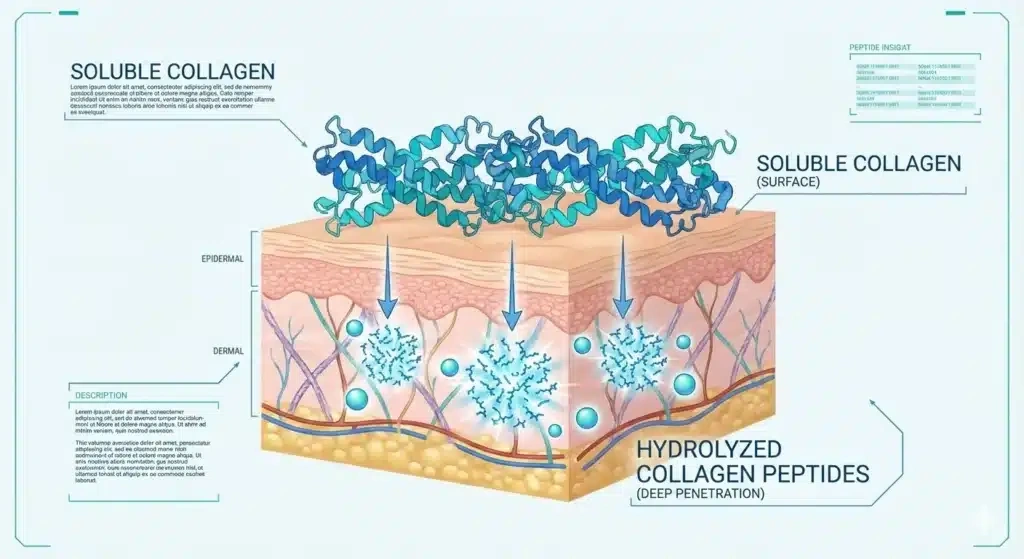
Image Source: Collagensei
Your skin doesn’t care how expensive that collagen cream is. What matters is whether the molecules can squeeze through your skin’s protective barrier. The answer lies in understanding molecular weight, measured in Daltons, and how it determines what reaches your dermis versus what sits on the surface.
Why Topical Collagen Can’t Penetrate the Dermal Barrier
The stratum corneum, your skin’s outermost layer, functions as a selective fortress. This brick-and-mortar structure consists of dead skin cells (corneocytes) embedded in a lipid matrix, creating tight gaps that regulate what enters your body [1]. Any skincare ingredient penetration requires molecules to meet specific size requirements.
Research establishes the 500 Dalton rule as the threshold for skin absorption [2]. Molecules weighing more than 500 Daltons cannot pass through the corneal layer. Three compelling arguments support this threshold:
- All but one of these common contact allergens weigh under 500 Daltons, while larger molecules cannot penetrate and thus cannot act as allergens in humans
- The most used pharmacological agents in topical dermatotherapy all fall under 500 Daltons
- All known topical drugs used in transdermal drug-delivery systems remain under 500 Daltons [2]
Native collagen weighs around 300 kDa (kilodaltons), which equals 300,000 Daltons [3]. This molecular weight makes topical collagen 600 times larger than the penetration threshold. Applying collagen topically has never been shown to stimulate collagen synthesis or growth [4]. These molecules remain locked outside, sitting atop your skin rather than being absorbed [5].
Collagen fibers measure about 300 nanometers long and 1.5 to 2 nanometers in diameter [3]. The mesh-shaped structure cannot enter the skin at the time it’s formulated into creams [4]. The effect of collagen is attributed to its penetration, so a standard collagen cream has no effect on skin structure [4].
How Hydrolyzed Collagen Peptides Break Down for Absorption
Hydrolyzed collagen takes a different path. This form consists of small peptides with molecular weights between 0.3 and 8 kDa [6]. Some formulations use peptides ranging from 3 to 6 kDa [7]. The enzymatic breakdown process uses water and enzymes to fragment collagen molecules into smaller units with an average molecular weight 75 times lower than native collagen [3].
These peptides travel through your bloodstream as dipeptides (like Gly-Pro and Pro-Hyp) and tripeptides (like Gly-Pro-Hyp) at the time you ingest hydrolyzed collagen [8]. The collagen peptides and free amino acids distribute into the dermis once you take them orally, where they can remain for up to 14 days [6].
The mechanism is different from topical application. Hydrolyzed collagen exerts a dual action in your dermis. Free amino acids contribute to the formation of collagen and elastin fibers, while collagen oligopeptides stimulate the production of new collagen, elastin, and hyaluronic acid [6]. Dipeptides containing hydroxyproline, especially Pro-Hyp, promote the growth of dermal fibroblasts and improve hyaluronic acid production, increasing moisture levels in the stratum corneum [8].
Studies show that around 8 percent of hydrolyzed collagen with molecular weights between 5 and 13 kDa could penetrate the skin at the time it’s applied topically [9]. Fractionated samples at 4.5 and 3.5 kDa showed the best transdermal penetration in the first four hours according to the Franz type diffusion cell model [9]. But these topical peptides provide hydration rather than directly replenishing collagen [5].
The difference between oral and topical hydrolyzed collagen becomes critical for that reason. Native collagen properties are different from those of hydrolyzed collagen. The triple-helix structure changes to a random coil form after denaturation, breaking bonds in the polypeptide chain and resulting in peptides that cannot reassemble to build collagen in skin layers [4].
The Science Behind Skincare Ingredient Penetration
Skincare ingredient penetration occurs through two primary routes. The intercellular path represents the most common route for drugs and cosmetic products. The stratum corneum contains multiple lipid bilayers of ceramides, fatty acids, and cholesterol arranged in that brick-and-mortar structure [9].
The transcellular route requires different approaches. Methods of circumventing the stratum corneum include selecting proper molecular sizes, adding liposomes, hydrating the stratum corneum beforehand, and using chemical penetration enhancers. More aggressive techniques bypass the stratum corneum through microneedle arrays, ablation, follicular delivery, and methods like ultrasound or iontophoresis [9].
Permeation depends on multiple factors beyond molecular size. These include the substance’s physicochemical properties (stability, binding affinity, solubility), time-scale of permeation, skin thickness and components, cutaneous metabolism, and application site, area, and duration [9]. The larger the peptide (beyond six or seven amino acids), the less likely it is to reach deeper layers [9].
Recent breakthroughs show that micronized marine collagen can overcome the size barrier. Researchers prepared collagen fibers measuring around 120 nanometers through a micronization procedure [4]. Environmental scanning electron microscopy images confirmed the original mesh-shaped collagen fibers transformed into these smaller fibrils with a hydrodynamic size of 368 ± 103 nanometers [4].
These micronized collagen fibers can cross the stratum corneum and affect inner skin structure, unlike standard topical collagen that remains on the skin surface [4]. The amount of micronized collagen in the epidermis exceeded that in the stratum corneum and increased in the deep epidermis layer [4]. This treated collagen also showed a 77 percent reduction in the intensity of hydroxyl radicals, compared to only 36 percent with native collagen [4].
Formulators often combine large and small molecular size ingredients to create synergistic effects. Larger molecules like proteins and certain polymers offer surface-level benefits such as moisturization and protection. Their collective action improves overall product performance at the time they’re paired with smaller molecules [3]. Delivery systems like liposomes or nanotechnology can improve ingredient penetration and targeted delivery to specific skin layers [3].
The quality of hydrolyzed collagen depends on its average molecular size, which varies according to the extraction method used [6]. Both the World Health Organization and the European Commission for Health and Consumer Protection have stated that hydrolyzed collagen is safe [6]. Active ingredients with low Dalton values, including vitamin C, vitamin A, and peptides, allow for optimal penetration through the skin barrier to reach deeper layers where they interact with skin cells and stimulate collagen production [3].
Truth #2: Ingestible Collagen Triggers Your Body’s Own Production
Image Source: Clique Clinic
Swallowing collagen does something topical applications never can. It signals your body to ramp up its own collagen factory. Studies confirm that oral collagen clinical results show measurable improvements in skin structure, but the mechanism isn’t about depositing collagen where you want it. Ingested collagen peptides act as messengers that wake up dormant fibroblasts instead.
How Oral Collagen Clinical Results Prove Skin Fibroblast Stimulation
Fibroblasts are connective tissue cells that produce and maintain collagen [10]. Your body breaks down hydrolyzed collagen into amino acids that distribute wherever protein is needed most at the time you ingest it [2]. Research reveals something more specific happens, but. Collagen hydrolysates rich in proline-hydroxyproline stimulate hyaluronic acid production in dermal fibroblast cells through oral administration [1].
Hyaluronic acid serves as the key molecule involved in skin moisture. It has a unique capacity to retain water molecules [1]. Aging skin shows the most striking change: the gradual loss of epidermal hyaluronic acid [1]. Dipeptides that have hydroxyproline, especially Pro-Hyp, promote the growth of dermal fibroblasts and boost hyaluronic acid production. Moisture levels in the stratum corneum increase as a result [1].
Clinical trials demonstrate these aren’t just theoretical benefits. A review and analysis of 19 studies with 1,125 participants found that those who used collagen supplements saw improvements in the firmness, suppleness, and moisture content of the skin. Wrinkles appeared less noticeable [11]. Randomized controlled trials show that collagen supplements with high amounts of the peptides prolylhydroxyproline and hydroxyprolylglycine can improve skin moisture, elasticity, wrinkles, and roughness [11].
One study on aged mice showed that oral administration of collagen peptides derived from bovine bone improved skin laxity. The skin’s collagen content and ratio of type I to type III collagen increased [1]. Twelve weeks of supplementation with oral collagen improved skin elasticity by a lot in humans [1]. Another study found that 12 weeks of oral collagen film consumption increased the skin surface’s elasticity by a lot. Measurements improved from 0.66 before use to 0.75 after treatment [1].
Fish emerged as the optimal source of collagen to improve skin hydration [1]. Marine collagen peptides improved skin elasticity by a lot in clinical trials [1]. Groups taking oral collagen showed differences in mechanical properties compared to baseline and placebo groups after 90 days of treatment [1].
Specific peptide profiles matter for results. Products that have high quantities of prolylhydroxyproline and hydroxyprolylglycine are better at reducing wrinkles and improving the moisture content of skin [11]. Your body may break these peptides down further into building blocks that make proteins like keratin. These proteins help form skin, hair, and nails [11].
The quality concern here needs mention. A meta-analysis of 23 randomized controlled trials found that studies not receiving funding from pharmaceutical companies revealed no effect of collagen supplements on skin hydration, elasticity, and wrinkles. Those receiving industry funding did show effects [10]. High-quality studies revealed no effect in all categories, while low-quality studies revealed improvement in elasticity [10]. This doesn’t mean oral collagen doesn’t work. You should inspect study funding sources at the time you evaluate claims, but.
Type 1 vs. Type 3 Collagen: What Your Skin Needs
Collagen has amino acid chains that make it a structural component of connective tissues like skin, tendons, muscles, ligaments, and blood vessels [12]. Various types of collagen serve unique purposes [12]. Understanding which types benefit skin helps you choose effective collagen skincare supplements.
Type I collagen alone accounts for around 90% of all collagen in the human body [2]. It’s not only the most abundant type of collagen but one of the most abundant molecules in the body. Skin, bone, and connective tissue need it especially [2]. Fibril-forming type I collagen is the major collagen in the skin and has 90% of the total collagen. It plays a role in structural organization, integrity, and strength [1]. This is the collagen responsible for that youthful, plump appearance [2].
Type I collagen has densely packed fibers made up of smaller protein building blocks called amino acids [2]. These fibers give skin its stretchiness and provide structural support to various tissues [2]. You should focus on Type I and III for anti-aging and skin health [2]. Marine collagen supplements and bovine sources of Type I collagen are both bioavailable. Your body can absorb and employ them easily [2].
Type III collagen is the second most abundant collagen in the body. Organs such as skin, large blood vessels, uterus, lungs and bowel have it as a major structural component [2]. Type III collagen makes up anywhere between 5% and 20% of the collagen content in the human body [2]. Young skin has approximately 80% Type I collagen and about 15% of Type III collagen for context [2].
Type III collagen gives skin its bounce-back quality [2]. You pinch your skin, and it returns to normal slowly. That’s due to Type III collagen breakdown in part [2]. This type is important for maintaining youthful skin texture, especially [2]. Type III collagen works alongside type I collagen to keep your skin firm and elastic [2].
Type I collagen forms thick fibers, but Type III collagen makes thin, branching fibers [2]. These fibers create a supportive mesh-like framework that supports organs and tissues that need to be flexible yet strong. Blood vessels, skin, and internal organs need this support [2]. Type III collagen also has a function in wound healing and in healthy blood clotting activity [2].
Types 2 and 3 are present together in the organs and skin. Type 2 is found in joints and cartilage [12]. Types I and III may be most beneficial for skin health, while type II may help with joint pain [12]. Collagen supplements often feature bovine or marine sources of these types [2].
Daily Collagen Dosage for Skin: Getting the Right Amount
Research suggests that taking 2.5 to 15 grams of hydrolyzed collagen peptides daily may be safe and effective [12]. A review of clinical studies in 2019 concluded that taking between 2.5 and 15 grams of hydrolyzed collagen peptides each day is safe and effective [13][14]. That’s quite a wide range. Doses from a minimum of 2.5 grams will have some benefit for the skin, but this is the minimum amount recommended. Fifteen grams is the maximum for a daily serving [13][14].
Your health goals determine your ideal collagen dose [12]. Studies used doses ranging from 372 mg to 10 grams for healthy skin aging [12]. Lower doses may support skin health. Five to 10 grams may benefit bone and joint health [12]. A smaller dose benefits your joints and skin, while a larger amount may help with body composition and muscle mass [14]. Taking 15 grams may help increase muscle mass and strength [12].
Taking hydrolyzed collagen doses of 2.5 to 15 grams per day, for up to 12 weeks, may be safe and beneficial [12]. Studies show that taking 2.5 to 15 grams daily of hydrolyzed collagen is safe [14]. Collagen is a safe and nontoxic daily supplement, and most people won’t experience any side effects [12]. Research has not shown negative side effects in people given collagen supplements [15].
Timeline matters for seeing results. You can expect to start seeing results within 90 days at the time you choose collagen drinks. You’ll need to stay consistent with your routine [13][14]. Research has shown that after 90 days of taking a daily collagen dosage, results included water loss in the skin slowed and decreased by 22%. Skin elasticity improved by 67%, and collagen levels in participants’ skin increased by 30% [13][14].
The long-term use of collagen yields more favorable effects on skin hydration and elasticity than the short-term use of collagen [1]. One study showed that in humans, 12 weeks of supplementation with oral collagen improved skin elasticity by a lot compared with other durations [1].
Collagen production begins to decline after the age of 25 to 30 [12]. Collagen becomes fragmented, and fibroblast function declines as people grow older [10]. These changes, along with the loss of another key structural protein called elastin, lead to signs of aging such as sagging skin and wrinkles [10]. Collagen synthesis declines by 1% to 1.5% each year with aging. This causes deeper wrinkles and facial lines [10].
Breaking down collagen makes it easier for the body to absorb in its entirety than collagen taken as a complete protein [14]. Your body can’t absorb collagen in its whole form [2]. Your body breaks down the collagen proteins you eat into amino acids [2]. Hydrolyzed collagen, also known as collagen peptides, is collagen that has been broken down into smaller amino acid chains for better absorption [12]. Your gastrointestinal tract absorbs collagen peptides [2].
Keep in mind that you can’t direct ingested collagen peptides from foods or supplements to where you want them to be used [2]. Your body employs these peptides for whatever it needs, be it collagen or protein [2]. No human studies have proven that the collagen you take orally will end up in your skin, hair, or nails [11]. The clinical improvements in skin metrics suggest the body does employ these peptides for skin structure.
Truth #3: Topical Collagen Works as a Moisturizer, Not a Collagen Booster
Topical collagen won’t rebuild your dermal matrix, but dismissing it misses what it does. Collagen acts as a natural humectant and has moisturizing properties, so it serves as a simple ingredient in many cosmetic products [16]. The molecules stay on the surface, yet they deliver measurable hydration benefits that you shouldn’t overlook.
What Topical Collagen Actually Does for Your Skin
Collagen’s water-binding capacity stands out as its main function in topical formulations [16]. Topical collagen molecules are too large to penetrate deeply into the skin, but they excel at attracting and holding moisture on the surface [16]. This creates a plumper, smoother, and better-hydrated complexion.
Hydrolyzed collagen has been identified as a cosmetic ingredient with good moisturizing properties at the stratum corneum layer of the skin [16]. Many collagen creams act as moisture barriers and prevent transepidermal water loss while keeping skin hydrated for longer [16]. The barrier function efficacy, as expressed by transepidermal water loss (TEWL), showed improvement in clinical applications [16].
Berardesca developed a moisturizing lotion with hydrolyzed collagen applied morning and evening in 40 female subjects affected by non-lesional atopic sensitive skin [16]. After four weeks of topical applications, improvements appeared in hydration, skin surface smoothness at the microtextural level, and luminosity [16].
Topical collagen does not replace natural collagen in the skin, but it boosts hydration and surface firmness [17]. The added hydration reduces the appearance of fine lines and gives the skin a more supple, velvety finish for a while [16]. This makes it especially beneficial when you have dry, dehydrated, or mature skin.
A study oriented to immediate and long-term clinical benefits evaluated the efficacy of a hydrolyzed collagen-based formulation on periocular and perioral wrinkles [16]. Topical line treatments reduced wrinkles within minutes of the first application [16]. After three months of treatment, continuous improvements were attributed to the effect of peptides, which have been shown to prevent MMP-induced damage to the extracellular matrix [16].
Moisture-binding ingredients like collagen help strengthen the skin barrier, which plays a role in healthy skin [16]. A strong barrier protects against environmental stressors such as pollution and weather changes [16]. Collagen-based formulas can help maintain a more balanced, resilient complexion with consistent use [16].
Marine Collagen Serums and Surface-Level Hydration
Collagen products extracted from marine sources like algae and fish exhibit properties related to the retention of water at the superficial part of the stratum corneum [16]. Marine collagen is known for its smaller molecular size, which may allow for better absorption and an added layer of hydration [18].
Studies on skin hydration and firmness from cosmetic formulations containing compounds derived from algae and fish collagen were conducted in medium-term (two weeks) and short-term (20 min) trials [16]. Creams enriched with the marine compounds showed higher values of hydration compared to creams without collagen [16]. These results suggested that marine compounds brought additional moisturizing potential [16].
Marine collagen can improve skin’s elasticity and smoothness while giving it a plumper, more youthful look [18]. Collagen masks and serums often deliver quick cosmetic results where skin looks smoother and more radiant right after application [16]. This explains why collagen sheet masks are popular choices before special events and provide fast hydration while giving the skin a visible boost in luminosity [16].
When Topical Applications Make Sense
Topical collagen skincare products can help moisturize and improve your skin texture [19]. The benefits of topical collagen are less well-studied than oral supplements, but applying topical collagen appears to improve skin hydration and prevent water loss [19].
Collagen works well for people with sensitive or reactive skin who may not tolerate stronger active ingredients [16]. It offers hydration and smoothing benefits without causing redness or peeling [16]. Topical collagen delivers visible results that oral supplements cannot match for immediate cosmetic improvements.
Combining topical collagen with ingredients like retinoids or peptides proves more effective for long-term structural collagen improvement [16]. These supporting ingredients can help improve skin elasticity and encourage a firmer appearance when used over time [16]. Hyaluronic acid and vitamin C complement collagen by supporting the skin’s natural production processes [16].
Regular use of topical collagen products can improve hydration and provide the immediate cosmetic benefit of smoother, softer skin [18]. Visible improvements usually appear within one skin renewal cycle, roughly four weeks [17]. Topical collagen may not rebuild collagen deep inside the skin, but it earns its place in a skincare routine by hydrating, smoothing, and strengthening the skin’s surface [16].
Truth #4: Not All Ingestible Collagen Is Created Equal

Walking down the supplement aisle reveals dozens of collagen products, but their quality varies wildly. Fish collagen absorbs up to 1.5 times more efficiently into the body. This gives it superior bioavailability over bovine or porcine types [16]. Marine collagen contains Type I collagen primarily, the same type most abundant in human skin. It offers smaller peptide molecules that could improve absorption [20].
Bioavailable Collagen Supplements: What to Look For
Hydrolyzed collagen proves more bioavailable than other forms due to its smaller molecular weight. This means it digests and absorbs more easily [21]. Wild-caught marine collagen is the most beneficial source. It delivers over 90% protein as a highly absorbable collagen that undergoes heavy metal testing [21]. The hydrolysis process breaks down protein into shorter chains and increases bioavailability. Your body absorbs maximum benefits this way [21].
Third-party testing separates quality supplements from questionable ones. One study identified 59 different collagen products and found that many didn’t identify the collagen source [22]. Of those who did identify the source, 17% said it was fish, yet none had allergy warnings [22]. Very few had third-party verification to certify the sourcing, purity, and additional ingredients [22].
Look for collagen produced in a cGMP facility. Third-party testing confirms higher quality and safety standards [21]. Pharmaceutical-grade collagen powders are top-quality, pure, and safe. They’re made with strict standards to ensure effectiveness [21]. Choose options that are non-GMO, gluten-free, and dairy-free, with no added fillers or binders [21]. Steer clear of corn or soy, which could cause inflammation [21].
Collagen Peptide Absorption Rates Matter
Molecular weight affects absorption efficiency directly. Collagen with a molecular weight of approximately 2,000 Daltons or lower is very small and ideal for absorption [21]. Some premium formulations contain collagen with molecular weights as low as 1,000 Daltons. Tripeptides reach an ultra-small 500 Daltons [21].
Research comparing fish, porcine, and bovine collagen hydrolysates with different molecular weights (bovine 2,000 and 5,000 Da) showed comparable uptake of free hydroxyproline from all sources [21]. A higher amount of total compared to free hydroxyproline suggested the uptake of substantial amounts of hydroxyproline-containing di- or tripeptides [21]. All collagen hydrolysates yielded relevant plasma concentrations of the investigated metabolites, independent of source and molecular weight [21].
Studies show Pro-Hyp appears at very high concentrations after oral intake. Maximum concentrations occur after 60 to 120 minutes [21]. The absorption of free hydroxyproline following gelatin ingestion was substantially lower compared to collagen hydrolysates. This suggests that dipeptides were cleaved from the parent collagen protein during gastrointestinal passage [21].
Vegan Collagen Alternatives and Their Effectiveness
Vegan collagen doesn’t contain collagen. Vegan collagen supplements use ingredients such as yeasts and bacteria, or provide what your body needs (amino acids, vitamins, minerals) to boost your own collagen production [16]. These products comprise vitamin C as the main ingredient. Vitamin C is an antioxidant that human bodies employ to create collagen as an essential cofactor for two of the enzymes needed for collagen synthesis [16].
One clinical trial using vegan collagen showed it substantially increased collagen density and elasticity by 4.7% and 5.1%. It decreased wrinkles, texture, and pores by 27.5%, 20.1% and 12.3% compared to the placebo group [23]. Hydration and lightness increased by 4.3% and 2.3% compared to the placebo group [23].
The effectiveness of vegan collagen depends on individual factors. Those with poor digestion will see reduced effects because their bodies won’t integrate ingredients nearly as well [16]. Older people whose bodies make less collagen won’t necessarily improve their ability to do so by adding more of what’s needed to build something [16]. Only about one in 20 people in developed nations is deficient in vitamin C. With how prevalent vitamin C is in fresh fruits and vegetables, it’s a quickly fixed problem [16].
Collagen Supplement Side Effects You Should Know
Collagen side effects are rare. Mild stomach upset is the most common [21]. Some people may experience digestive issues such as heartburn, bloating, gas, constipation, or diarrhea [21]. Research found that taking a collagen supplement is safe and has a very low risk of side effects. Study authors concluded that taking high doses of collagen was unlikely to cause adverse effects [21].
Collagen peptides have been used safely in doses up to 10 grams daily for up to 6 months. Side effects are rare [24]. Collagen peptides in doses up to 10 grams per day can be used safely for up to 5 months with very few side effects [25]. Most healthy adults can take a daily collagen supplement without adverse effects [21].
Allergic reactions remain possible. A study described allergic reactions in two individuals exposed to bovine collagen [21]. Collagen supplements made from marine sources run the risk of being contaminated with methylmercury [26]. Manufacturers often combine collagen with other ingredients in supplements. Certain ingredients may pose health risks, such as herbs and high levels of vitamins [22]. Some supplements that contain collagen may also contain megadoses of nutrients like biotin. This could interfere with laboratory tests for heart and thyroid function [22].
Collagen supplements could interact with blood thinners like warfarin. Consult your doctor before taking collagen if you take prescription medications [22]. Do not take a collagen supplement if you are pregnant or nursing [21] [24]. Supplements are not regulated by the FDA and are not checked for safety or effectiveness before entering the marketplace [22] [26].
Truth #5: The Best Results Come from Combining Both Approaches

Image Source: Vogue Arabia
Choosing between topical and ingestible collagen misses the point. Both forms offer distinct benefits, and a dual action approach might be the most effective strategy [27]. Ingestible collagen provides systemic benefits and boosts skin hydration and elasticity from within. Topical applications offer immediate, localized results [27].
Inside-Out Beauty: Why Dual Action Works
Clinical observations show that users combining topical serums with oral collagen support achieve 40% more improvement in skin luminosity compared to topical treatment alone [28]. Innovative studies have been carried out with the combination of topical application of peptides and oral supplementation of hydrolyzed collagen mixed with vitamin A, C, D, and zinc [9]. This inside-out approach addresses surface symptoms and internal triggers at the same time [28].
Professional Grade Collagen Products for Maximum Effect
Topical products provide immediate hydration and protection while ingestible supplements support long-term skin health [27]. Consistency is paramount because it allows active ingredients to work over time. This enables gradual but sustained improvements in skin health and appearance [27].
Building Your Customized Collagen Skincare Routine
Simple routines deliver better results than complex multi-step regimens. Choose two to three renewal actives and alternate every day [29]. Pared-back routines that you can follow religiously outperform complex protocols you’ll abandon [29]. Give your skin what it needs at the time it needs it, and reassess every 10 to 12 weeks [29].
Conclusion
The debate between topical and oral collagen has a clear answer: both serve distinct purposes. Topical products deliver immediate hydration and surface-level benefits. Ingestible collagen stimulates your body’s natural production from within. Molecular size dictates what penetrates your skin barrier, which is why hydrolyzed collagen peptides outperform native collagen molecules. Combining a quality oral supplement (2.5 to 15 grams daily) with topical hydration creates effects that neither approach achieves alone. Focus on bioavailable, third-party tested marine or bovine collagen supplements. You’ll see measurable improvements within 90 days. Your skin deserves this dual action strategy.
Stop guessing and start innovating! The market is demanding the truth about collagen, and your brand can be the one to provide it. Partner with CL Cosmetic Industries to manufacture a scientifically-backed collagen skincare range that delivers real results. The R&D team is ready to help you lead the 2026 regenerative beauty market!
Collab with CL Cosmetic Industries to build your collagen brand now by submitting your requirements via the form on the homepage or the live-chat/WhatsApp button available on the homepage too 🙂
Key Takeaways
Understanding the science behind collagen absorption and application methods helps you make informed decisions about which products actually deliver results for your skin.
• Molecular size determines effectiveness: Topical collagen (300,000 Daltons) cannot penetrate the skin’s 500 Dalton barrier, while hydrolyzed peptides (0.3-8 kDa) absorb systemically to stimulate natural collagen production.
• Oral supplements trigger internal production: Ingesting 2.5-15 grams daily of hydrolyzed collagen peptides signals fibroblasts to increase collagen synthesis and hyaluronic acid production from within.
• Topical collagen works as a moisturizer only: Surface applications provide immediate hydration and temporary plumping effects, but cannot rebuild dermal collagen structure.
• Quality varies dramatically between products: Marine collagen with molecular weights under 2,000 Daltons offers superior bioavailability, requiring third-party testing and cGMP facility production.
• Combining both approaches maximizes results: Users see 40% more improvement in skin luminosity when pairing oral supplements with topical hydration versus single-method treatments.
The most effective strategy involves taking quality oral collagen supplements daily while using topical products for immediate surface benefits, creating a comprehensive inside-out approach to skin health.
FAQs
Q1. How long does it take to see results from taking collagen supplements? You can expect to start seeing noticeable improvements in your skin within 90 days of consistent daily collagen supplementation. Research shows that after this period, skin elasticity can improve by up to 67%, collagen levels in the skin can increase by 30%, and water loss can decrease by 22%. For best results, maintain a daily routine with 2.5 to 15 grams of hydrolyzed collagen peptides.
Q2. What’s the difference between Type I and Type III collagen for skin health? Type I collagen makes up about 90% of your skin’s total collagen and provides structural support, firmness, and that plump appearance. Type III collagen, which comprises 5-20% of skin collagen, gives your skin its bounce-back quality and elasticity. Both types work together to maintain youthful skin texture, with young skin typically containing 80% Type I and 15% Type III collagen.
Q3. Can topical collagen creams actually increase collagen in my skin? No, topical collagen cannot increase collagen levels in your skin because the molecules are too large to penetrate the skin barrier. Native collagen weighs 300,000 Daltons, which is 600 times larger than the 500 Dalton threshold needed for skin absorption. However, topical collagen products do provide valuable surface-level hydration and can temporarily reduce the appearance of fine lines by acting as effective moisturizers.
Q4. Is marine collagen better than bovine collagen for skin benefits? Marine collagen is absorbed up to 1.5 times more efficiently than bovine collagen due to its smaller molecular size and higher bioavailability. It contains primarily Type I collagen, which matches the most abundant collagen type in human skin. However, both marine and bovine sources of hydrolyzed collagen can be effective when they have molecular weights under 2,000 Daltons and come from third-party tested, quality sources.
Q5. Are there any side effects from taking collagen supplements daily? Collagen supplements are generally safe with very few side effects when taken at recommended doses of 2.5 to 15 grams daily. The most common side effect is mild digestive discomfort, including bloating or gas. However, if you have seafood allergies, avoid marine collagen, and consult your doctor before taking collagen if you’re on blood thinners, pregnant, or nursing.
References
[1] – https://pmc.ncbi.nlm.nih.gov/articles/PMC10180699/
[2] – https://www.hollandandbarrett.com/the-health-hub/vitamins-and-supplements/supplements/collagen/the-ultimate-guide-to-collagen-types-i-ii-and-iii/
[3] – https://naturepure.com/the-science-behind-skin-care-unraveling-dalton-and-molecular-size-for-effective-skin-care-formulations/?srsltid=AfmBOorlR_PgiCAk6GLmRm4xJt0qMEsc3u4_O5zHwHlXTmAjTegzMBmi
[4] – https://pmc.ncbi.nlm.nih.gov/articles/PMC9122277/
[5] – https://www.bubsnaturals.com/blogs/all-about-collagen/can-collagen-penetrate-the-skin-understanding-the-myths-and-facts?srsltid=AfmBOoqs_Xf2ntn18IW6TRXcJ8n3mIGpvRoBlVJBPcxlqOvqNlplajY9
[6] – https://pmc.ncbi.nlm.nih.gov/articles/PMC8944283/
[7] – https://www.sciencedirect.com/science/article/pii/S2405844024124644
[8] – https://www.cureus.com/articles/207671-exploring-the-impact-of-hydrolyzed-collagen-oral-supplementation-on-skin-rejuvenation-a-systematic-review-and-meta-analysis
[9] – https://pmc.ncbi.nlm.nih.gov/articles/PMC7070905/
[10] – https://www.sciencedirect.com/science/article/abs/pii/S0002934325002839
[11] – https://www.health.harvard.edu/blog/considering-collagen-drinks-and-supplements-202304122911
[12] – https://www.health.com/how-many-grams-of-collagen-per-day-8788716
[13] – https://www.skinglocollagen.com/blog/how-much-collagen-should-you-take/?srsltid=AfmBOoo-vRBr79fd99u-BBX53F8RmyEjy2aBLytESmoJPB39qmx3NDXB
[14] – https://www.uclahealth.org/news/article/should-you-take-collagen-supplements
[15] – https://nutritionsource.hsph.harvard.edu/collagen/
[16] – https://www.byrdie.com/vegan-vs-animal-based-collagen-11896981
[17] – https://bumpless.us/blogs/glass-skin-k-beauty-glow/top-benefits-of-using-a-collagen-moisturizing-cream-as-your-anti-aging-face-moisturizer?srsltid=AfmBOoq1sl1-su7WCcldX1UKNXgURvBmYV8avQioSUe9g0oN25pyk-Zw
[18] – https://wingitcosmetics.com/blogs/news/what-does-topical-collagen-do-what-are-the-benefits-and-role-of-collagen-in-skincare?srsltid=AfmBOopHRzrm70hHGLV62VJ8lXX6Qpn17cRmpNam9Y0n8_2kX5bUCYmb
[19] – https://www.health.com/collagen-skincare-8549988
[20] – https://wellbeingnutrition.com/blogs/skin-beauty/how-to-choose-plant-vs-animal-collagen-guide
[21] – https://www.verywellhealth.com/collagen-side-effects-11836628
[22] – https://www.healthline.com/nutrition/collagen
[23] – https://www.sciencedirect.com/science/article/pii/S1756464623005558
[24] – https://www.webmd.com/vitamins/ai/ingredientmono-1606/collagen-peptides
[25] – https://www.vinmec.com/eng/blog/does-taking-collagen-have-any-side-effects-en
[26] – https://now.tufts.edu/2025/10/09/will-oral-collagen-supplements-keep-my-skin-healthy
[27] – https://perelelhealth.com/blogs/news/collagen-hyaluronic-acid-skincare-supplements?srsltid=AfmBOoorpyoc0FUgpvSlUFwsvo0i8NirPpTwiWC6PWVo8e96sL142njU
[28] – https://www.cosmo.com.ua/beauty/skincare/the-complete-solution-how-inside-out-skincare-is-changing-everything/
[29] – https://www.vogue.com/article/simplifying-skin-routine-boost-collagen