
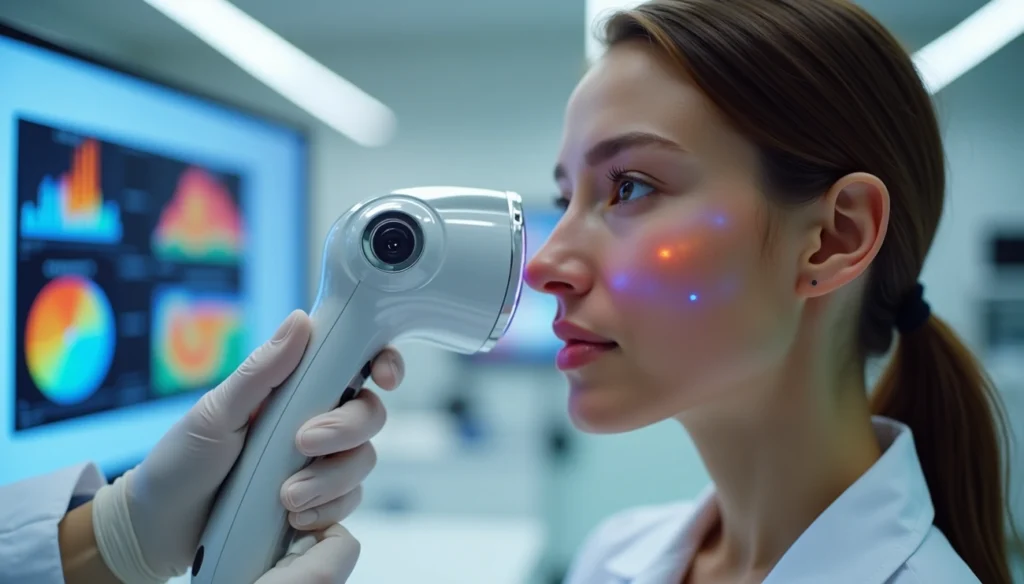
AI skin analysis tools are reshaping beauty manufacturing as the Skin Test Analyzer Market surges from USD 1.72 billion in 2025 to USD 2.18 billion in 2026. Brands just need tailored diagnostics and are moving toward bespoke ODM manufacturing 2026 solutions that combine multispectral imaging for beauty, predictive skincare algorithms, and UV skin damage detection technology. The at-home skin analysis equipment market will grow at 12.7% through 2033. Cosmetic companies must build custom devices now. This piece walks you through everything in AI technologies and technical specifications you need to launch competitive beauty tech products through ODM customization.
Understanding AI skin analysis tools for ODM manufacturing
What ODM customization means in beauty tech
ODM (Original Design Manufacturing) partners handle the whole product creation process, from concept through manufacturing. Beauty brands can launch market-ready devices without building in-house R&D infrastructure. The global cosmetics ODM market reached USD 16.5 billion in 2026 and is projected to reach USD 30.5 billion by 2036, expanding at 6.4% CAGR.
Customization extends across multiple layers. Brands can personalize appearance design, including device shells, color themes, and finishes that align with brand identity. Interface and software tailoring enable smooth operation through custom user experiences. Diagnostic and reporting configuration allows adjustment of analysis parameters, report formats, and AI interpretation settings to match professional workflows. Logo and branding elements make devices exclusive and recognizable in competitive markets.
The change toward ODM manufacturing stems from speed requirements. Digital-first beauty brands refresh hero SKUs and seasonal drops at a cadence that in-house R&D cannot match. ODMs have productized development through modular bases and pre-validated packaging systems that reduce rework and shorten pilot cycles. South Korea’s ecosystem illustrates this direction. Companies like Kolmar Korea and Cosmax streamline sampling and reduce minimum order requirements using studio-style co-creation and evidence-based color workflows.
Core components of AI-driven skin diagnostic systems
Professional AI skin analysis tools combine hardware and software layers that work in concert to deliver objective skin evaluations. The core hardware uses multi-spectral imaging modules that capture data across different light spectra.
RGB visible light captures surface features, including pores, wrinkles, texture, and acne scars. It provides high-definition visual reference. UV spectrum reveals sub-epidermal conditions, detecting hidden sun damage and Porphyrins, which are fluorescent metabolic byproducts of acne bacteria. Polarized light imaging (PL) in cosmetics suppresses surface reflection to visualize deeper dermal structures, including vascular issues and deep-seated pigmentation.
High-resolution cameras ranging from 10-15MP capture detailed facial images that enable precise evaluation. These imaging systems generate detailed skin health maps impossible to achieve through visual assessment alone.
The AI component relies on Convolutional Neural Networks trained on massive, clinically validated datasets. Feature segmentation identifies and isolates specific skin features accurately, distinguishing pores from spots or fine lines from deep wrinkles. Quantitative scoring measures the severity and prevalence of each feature. Results are compared to vast databases of peers with the same age and skin type to produce percentile scores. Automated diagnosis provides instantaneous assessments of inflammation, hydration levels, skin elasticity, and Fitzpatrick skin type.
Why 2026 is different for bespoke ODM manufacturing
Regulation has become a design constraint that travels with SKUs. US MoCRA pushes facility registration, listing, and safety discipline into the operating model. These advantages mean that ODMs already run audit-grade documentation and batch traceability as defaults. For many brands, the most affordable compliance strategy builds on an ODM’s existing quality system rather than replicating it internally.
Manufacturing flexibility has reached new levels. Cosmax’s Pyeongtaek 2 factory produces 10.2 cosmetic units per second using AI integration across development, assembly, and packaging stages. This production speed pairs with systems that generate new cosmetic products in roughly 30 seconds, drawing on accumulated R&D and trend data to recommend optimized formulations that match current market demand.
Skincare guides product mix with 46.0% share in ODM demand. This reflects high cadence of variants, claim scrutiny, and repeat purchase dynamics that reward operationally consistent development partners. Brands outsource the systems that make fast iteration possible: base-formula libraries, packaging qualification, preservative and stability strategies, and regulatory file readiness.
Essential AI technologies powering custom beauty devices
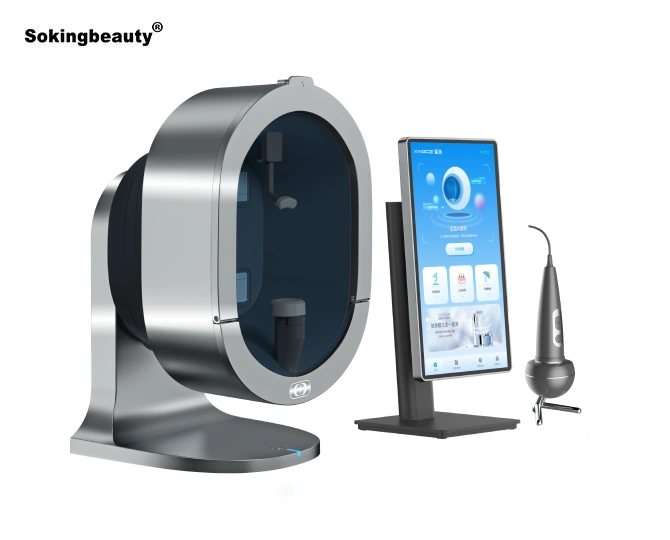
Image Source: Sokingbeauty
Multispectral imaging for beauty diagnostics
Multispectral imaging (MSI) captures reflected radiation in different wavelengths to reveal chromophore concentrations beneath the skin surface. The principal chromophores are oxy and deoxyhemoglobin, melanin, water, collagen, and bilirubin. MSI devices produce a spectral cube consisting of sequential images corresponding to illumination wavelengths in the 400-950 nm spectrum range. Commercial systems collect information from 2.5 cm below the skin surface. This allows them to tell the difference between benign and malignant nevi based on spectral characteristics.
Advanced systems use hyperspectral cameras with polarizing filters to remove gloss effects from the stratum corneum. They provide high-resolution images at 1120 x 900 pixels with 10 nm spectral sampling in the visible spectrum. The acquisition time for 31 wavebands totals 2.5 seconds. This minimizes movement artifacts while maintaining image registration. Cross-polarization eliminates surface reflections that create error factors in chromophore quantification.
VISIA’s patented analysis compares patient skin against the world’s largest skin feature database. It grades against peers of the same age and skin type while measuring spots, wrinkles, texture, pores, UV spots, brown spots, red areas, and porphyrins. Spectricity’s multispectral technology delivers full biomarker maps, including melanin, blood volume, and skin oxygenation. Cosmetic matching and dark circle diagnosis become simple with this technology.
Predictive skincare algorithms and machine learning in cosmetic R&D
Machine learning allows virtual screening of functional ingredients and predicts mechanisms of action. It aids multi-factor optimization considering safety, efficacy, and stability. ML systems integrate machine vision and molecular fingerprinting for up-to-the-minute monitoring and quality defect detection in production environments.
AI-powered skin analysis platforms assess over 20 skin health metrics with clinical precision. Multi-sensor devices equipped with optical, UV, and moisture-detecting modules analyze texture, hydration levels, pigmentation, and sebum balance with micron-level precision. Deep learning algorithms identify early signs of photodamage, inflammation, or barrier dysfunction. This allows timely interventions through personalized regimens.
ML models predict skincare product efficacy by analyzing historical data and consumer feedback. They assess formulation performance in demographics and environmental conditions. ML models predict consumer sensory perceptions like creaminess, absorption rate, and spreadability using rheological data inputs such as storage modulus, loss modulus, and yield stress.
Up-to-the-minute hydration biosensors and barrier function analysis
WearOptimo’s microelectrode platform penetrates skin without triggering pain receptors. It accesses healthcare signals unavailable to surface wearables. The machine learning algorithm interprets signals using more than one billion data points of hydration from formal clinical studies. Clinical results from 45 adult participants demonstrated superior monitoring capabilities compared to blood draw gold standards. The system achieved pain-free operation with no adverse effects.
Barrier function measurements rely on transepithelial electrical resistance (TEER) monitoring. Systems calculate barrier index normalizing TEER values for confluence by measuring at different frequencies at once. This provides sensitive detection of small, transient disruptions in barrier function.
High-resolution skin topography mapping
Three-dimensional in-vivo optical skin imaging quantifies surface topography and facial fine lines. The PRIMOS system projects light onto skin using Digital Micromirror Device technology and records images with CCD cameras. Temporal phase shift algorithms reconstruct skin surface microtopography and generate 3D images. Skin roughness decreased by 26% six months following treatment in wrinkle subjects. Acne scarring subjects showed 61% improvement in surface topography three months post-treatment.
High-Definition Optical Coherence Tomography (HD-OCT) provides fast acquisition with high resolution for precise topography analysis. The system processes images, evaluates surface roughness, and generates roughness parameter values, including Ra (average deviation), Rt (maximum depth range), and RzISO (averaged peak-valley measurements) automatically.
Cloud-based skin data analytics infrastructure
Haut.AI‘s algorithms train on diverse datasets, including over 3 million images spanning multiple ethnicities, skin tones, and age groups. The platform’s SkinGPT technology simulates skincare product effects over time and creates synthetic datasets that accelerate R&D discovery. Edge AI performs computations on user devices rather than cloud processing. This enhances privacy while delivering up-to-the-minute results.
Skinive.Cloud offers B2B SaaS access through APIs. This allows instant analysis of over 50 skin conditions. The platform conducts detailed online skin analysis, assesses skin health, and transmits information to customer applications for EHR and EMR integration.
Building your custom AI skin analyzer: technical specifications
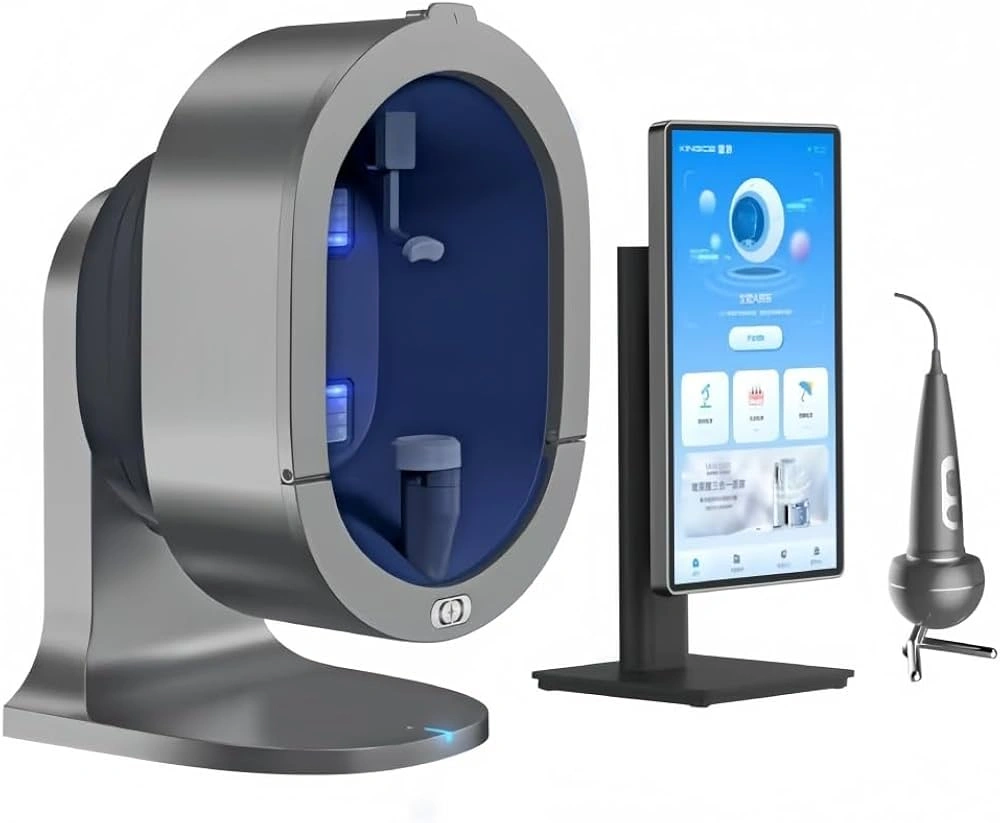
Image Source: Amazon.com
Building specifications for custom AI skin analysis tools requires integrating three distinct imaging modalities into a unified acquisition system. RGB visible light, UV spectrum, and polarized light imaging each capture different skin layers. Your device architecture must synchronize these channels without introducing registration errors between captures.
RGB, UV, and polarized light imaging (PL) in cosmetics integration
Smart Mirror Pro systems scan images across all three spectrums using automatic face recognition technology that analyzes 10 skin problems from epidermis and dermis layers. The RGB channel documents surface conditions. UV illumination reveals porphyrins and subsurface damage, while PL polarized light eliminates glare to visualize dermal structures. ColorPOL polarized light imaging operates at 75 frames per second and processes at 25 FPS after computational steps. This provides sufficient speed for real-time diagnostic workflows without motion artifacts.
Your imaging hardware needs telecentric optics that ensure equal illumination across the 25mm sample diameter while maintaining true dimensional accuracy. The system must normalize RGB images to background intensity for accurate white balance and consistent color rendering across lighting environments.
Non-invasive skin diagnostic tools configuration
Clinical validation drives device credibility. Non-invasive assessment tools, including high-resolution ultrasonography, optical coherence tomography (OCT), transepidermal water loss (TEWL) monitors, and BTC 2000 elasticity analyzers, showed statistically significant detection of treatment changes in facial skin studies. OCT penetrates up to 2mm depth with 3-15 μm axial resolution. High-frequency ultrasound at 20-50 MHz visualizes epidermis through dermis depending on transducer selection.
Smart mirror diagnostic software and IoT beauty device integration
ModiFace’s platform incorporates lens distortion compensation for camera misalignment and dynamic lighting technology that adjusts illumination for optimal simulation conditions. IoT connectivity enables cloud interaction between dedicated smartphone apps and dispensing machines, as Shiseido’s Optune system showed by analyzing skin measurements, environmental data, mood tracking, and menstrual cycle information.
Individual-specific product matching logic development
Haut.AI‘s Live Image Quality Assurance achieved 87% diagnostic-standard images compared to 32% without guided capture. The system evaluates 150+ facial biomarkers across 15+ skin metrics and then matches the analyzed data with products using biomarker algorithms rather than purchase history. Revieve’s automated algorithms serve 60M+ users and process 15M+ selfies. They replace pre-defined matching rules with real-time AI-powered recommendations.
ODM customization process: from concept to deployment
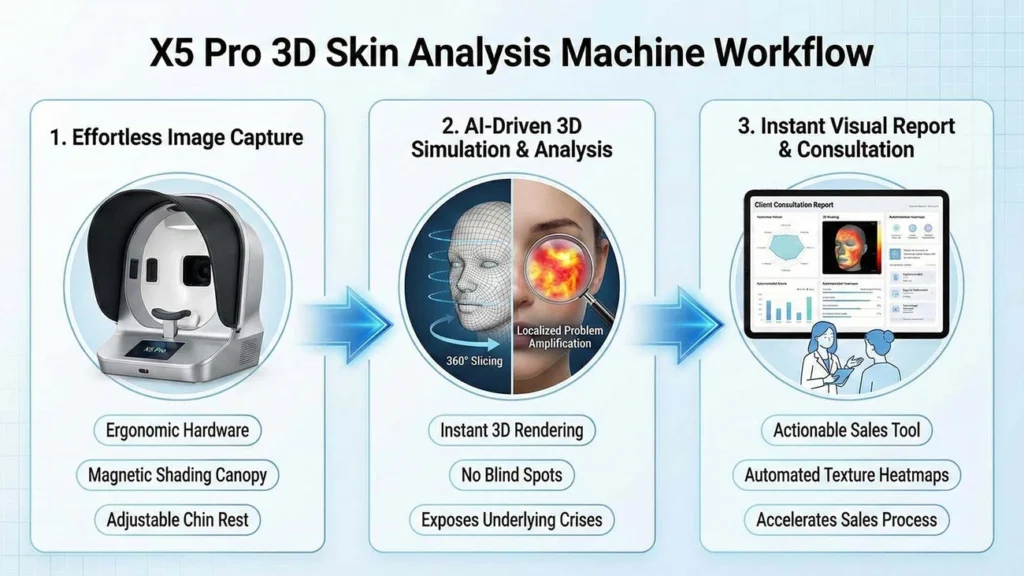
Image Source: Fotromed
Defining your target market and device requirements
Market positioning determines every downstream technical decision in bespoke ODM manufacturing 2026. Target competitors whose devices inspire improvement opportunities must be identified first. The device’s specific skincare purposes need definition next. Technology selection follows function: microcurrent for skin lifting, radiofrequency for tightening, LED light therapy for collagen stimulation, and acne treatment. Product positioning clarifies whether the device targets high-end or mid-range segments, specific age demographics, and distribution channels. Budget allocation and realistic timelines based on market window availability complete the foundation.
Working with dermatological-grade diagnostic APIs
Dermatological-grade diagnostic APIs accelerate development. They provide pre-validated analysis engines. Perfect Corp’s API detects 14+ skin conditions with 95% test-retest reliability, trained on over 70,000 medical-grade images. Autoderm offers white-label dermatology AI configured to your brand identity with structured findings and confidence indicators. Haut.AI‘s platform analyzes over 3 million images in a variety of skin tones and provides 150+ facial biomarkers.
AI-led ingredient optimization for hyper-personalized skincare formulas
AI algorithms parse ingredient lists for compounds including retinoids, alpha-hydroxy acids, parabens, and sulfates. These compounds get cross-referenced with individual skin profiles containing sensitivity markers and allergy history. Machine learning tools analyze historical formulation data to predict ingredient interactions and recommend optimal combinations. L’Oréal’s partnership with IBM built a generative AI model that extracts evidence-based findings from thousands of formulation records to accelerate new product creation while prioritizing renewable ingredients.
Testing cosmetic efficacy with AI validation
AI-driven virtual simulations analyze biological, chemical, and consumer data to predict skin reactions without invasive physical tests. Predictive models assess surfactants, polymers, and preservatives. They forecast texture, stability, and shelf life while flagging potential adverse reactions. This computational approach reduces development time by 50% and ensures regulatory compliance.
Manufacturing timeline and quality control
ODM partners conduct small-batch trial production before mass manufacturing. They assess product safety and reliability throughout. Want to see the real results of AI integration in your next product launch? Visit the homepage to fill out the inquiry form or chat with the experts via the WhatsApp/live chat button directly. Quality control systems ensure compliance with safety regulations and audit-grade documentation.
Business impact and competitive advantages
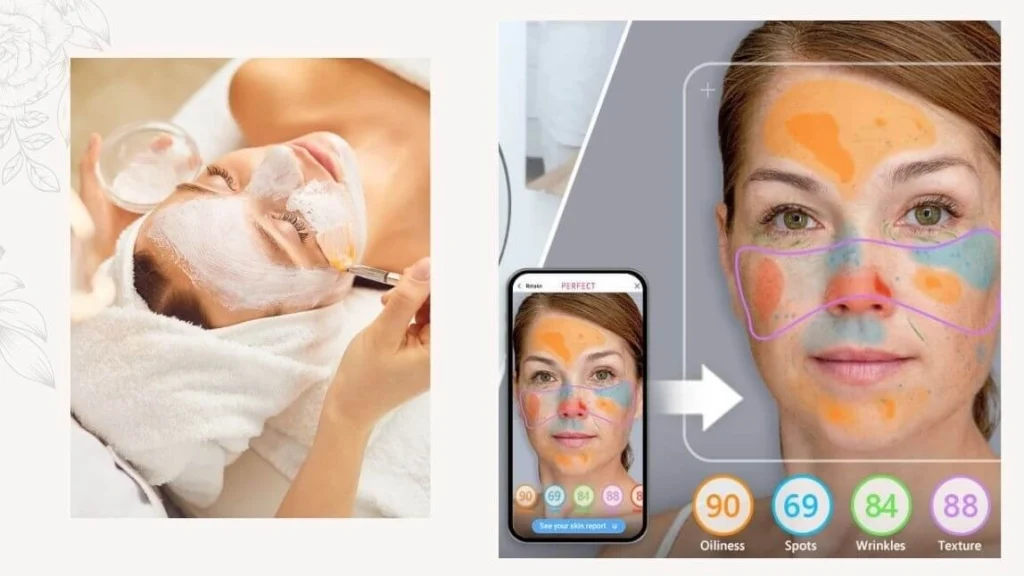
Image Source: Perfect Corp.
Building client trust with data-driven results
Clinics report 12-25% increases in treatment conversion rates since AI-generated visual evidence improves patient acceptance of recommended therapies. Consumers just need scientifically verified results rather than marketing promises. 63% of beauty consumers prefer tested skincare over non-tested products. AI skin analysis tools eliminate the skepticism surrounding subjective assessments. They provide objective and reproducible data that clients can see and understand.
Visual proof drives confidence. Clients view side-by-side comparisons showing subtle improvements they might otherwise overlook. This strengthens commitment to treatment regimens. The scientific objectivity of AI-driven dermal assessment lifts practitioners to expert advisor status and cements loyalty over time. Customized recommendations based on 250+ detected skin concerns reduce product mismatches that erode trust.
Revenue growth through AI-driven dermal assessment
Consultation time drops 20-40% because AI pre-screens conditions and reduces manual documentation. This enables faster triage. Average cost savings per clinic range from USD 25,000 to 60,000 each year through reduced redundant visits and optimized staff allocation. Businesses report 20-40% increases in retail product attachment rates when visual diagnosis connects specific skin problems to clear solutions.
Want to see the real-life results of AI integration in your next product launch? Visit the homepage to fill out the contact form or chat with the experts via the WhatsApp/live chat button.
Digital skin twin technology for brand differentiation
The global AI skin analysis market accelerates from USD 1.79 billion in 2025 to USD 7.11 billion by 2034 at 16.53% CAGR. Rising demand for hyper-customized skincare formulas and non-invasive skin diagnostic tools positions digital skin twin technology as the main competitive differentiation. Brands offering AI-powered personalization convert skeptical browsers into loyal customers who return for results-driven regimens.
Conclusion
AI skin analysis tools represent your fastest path to competitive beauty tech products in 2026. ODM partners handle the complex integration of multispectral imaging and predictive algorithms while you focus on brand strategy and market positioning.
The numbers verify the chance: double-digit market growth, 20-40% revenue lifts from AI-driven consultations. Consumers just need evidence-based personalization. Brands that launch now capture early-mover advantage in digital skin diagnostics.
Successful ODM partnerships reduce development time by half and eliminate compliance headaches. They deliver market-ready devices in months rather than years. Your next move is choosing the right ODM partner who matches your technical requirements with proven manufacturing excellence.
Key Takeaways
The AI skin analysis market is exploding, creating unprecedented opportunities for beauty brands to leverage ODM partnerships and advanced diagnostic technologies for competitive advantage.
• Market timing is critical: AI skin analysis market grows from $1.72B to $2.18B in 2026, with at-home devices expanding 12.7% annually through 2033.
• ODM partnerships accelerate launch: Reduce development time by 50% while eliminating compliance headaches through proven manufacturing partners with audit-grade systems.
• Multi-spectral imaging drives accuracy: Combine RGB, UV, and polarized light to capture surface and subsurface skin conditions with clinical-grade precision.
• AI delivers measurable ROI: Clinics report 20-40% revenue increases through faster consultations, higher product attachment rates, and improved treatment conversion.
• Personalization creates loyalty: AI-powered recommendations based on 150+ biomarkers convert skeptical browsers into committed customers seeking results-driven regimens.
The convergence of regulatory compliance (US MoCRA), manufacturing flexibility, and consumer demand for data-driven personalization makes 2026 the optimal window for launching AI-powered beauty devices through strategic ODM partnerships.
FAQs
Q1. What are the most accurate AI skin analysis tools available in 2026? AI skin analysis tools that combine multispectral imaging (RGB, UV, and polarized light) with machine learning algorithms trained on millions of clinically validated images deliver the highest accuracy. Professional-grade systems analyze 150+ facial biomarkers and achieve 95% test-retest reliability, detecting over 50 skin conditions, including subsurface damage, hydration levels, and pigmentation issues that aren’t visible to the naked eye.
Q2. Can I access AI skin analysis technology without paying upfront costs? Yes, several platforms offer free AI skin analysis tools that provide personalized skincare assessments without initial investment. These tools use smartphone cameras to capture facial images and deliver instant analysis of skin concerns, customized product recommendations, and tracking capabilities. However, professional-grade devices with multispectral imaging and clinical validation typically require investment for commercial use.
Q3. How reliable are AI-powered skin diagnostic results compared to traditional methods? AI skin analysis systems demonstrate a pooled sensitivity of 80.5% and a specificity of 96.2% across various skin conditions. These tools eliminate subjective assessment errors by providing objective, reproducible data based on billions of data points. Clinical studies show AI diagnostics match or exceed visual assessment accuracy, with some conditions, like atopic dermatitis, achieving 91.8% sensitivity rates.
Q4. What makes 2026 the optimal time to invest in AI beauty technology? The convergence of regulatory frameworks (like US MoCRA), advanced manufacturing capabilities, and explosive market growth creates unique opportunities. The AI skin analysis market expands from $1.72 billion to $2.18 billion in 2026 alone, while ODM partners now offer 50% faster development cycles, productized solutions, and compliance-ready systems that previously required years of in-house R&D investment.
Q5. How do AI skin analyzers improve business revenue for beauty brands? Businesses implementing AI skin analysis report 20-40% increases in product sales through personalized recommendations, 12-25% higher treatment conversion rates, and 20-40% reductions in consultation time. The technology builds client trust through visual proof of results, reduces operational costs by $25,000-60,000 annually per clinic, and creates competitive differentiation in the rapidly growing personalized skincare market.