

Biotech in men’s care has moved from simple formulations to a sophisticated investment frontier where biosynthetic peptides for male skin, PDRN in regenerative men’s grooming, and lab-grown cosmetic actives are redefining the category. Smart investors recognize that the men’s grooming market valuation 2026 projections reflect more than trends.
They signal a change in how male consumers approach skin longevity and barrier function. Capital flows into microbiome-friendly men’s series, high-performance ODM men’s care platforms, and precision manufacturing that combines efficacy with sustainability. Where investment dollars are moving, which biotech innovations deliver measurable returns, and how to review long-term opportunities in this evolving sector faster, this piece gets into all of that.
Men’s Grooming Market Valuation and Growth Trajectory in 2026
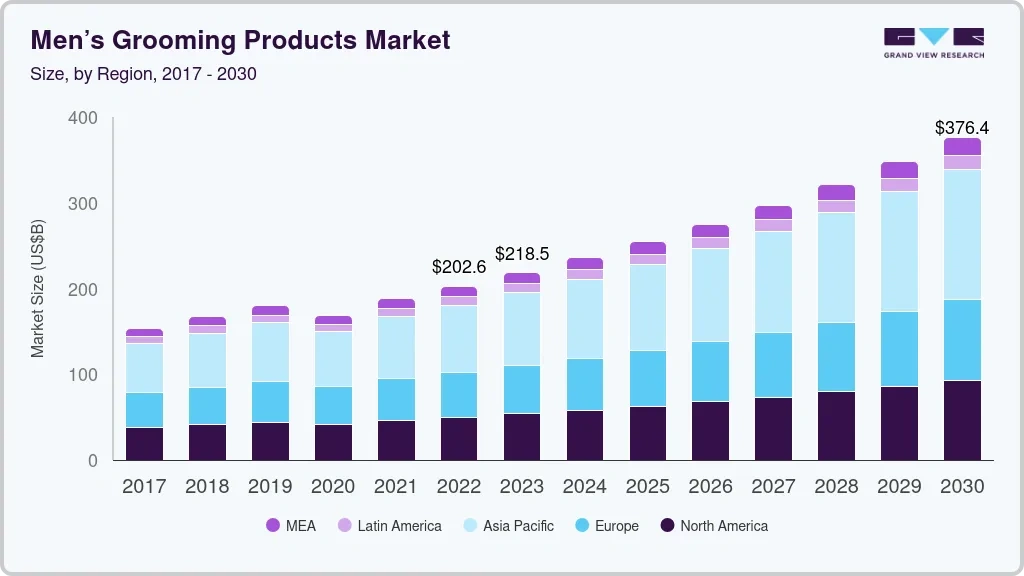
Image Source: Grand View Research
Current market size and projections
Multiple research firms place the men’s grooming market valuation in 2026 between $65 billion and $67.70 billion around the world, with projections reaching $90.21 billion to $108 billion by the early 2030s. The broader men’s grooming products market stood at $202.6 billion in 2022 and will climb to $376.4 billion by 2030, advancing at an 8.0% CAGR.
These figures represent more than incremental growth. The skincare segment alone commanded $19.1 billion in 2025 and will expand at a 6.2% CAGR through 2035. Facial care now accounts for 82% of total men’s skincare sales. This reflects concentrated consumer focus on visible skin health rather than fragmented product categories.
The premium segment delivers the sharpest growth trajectory. Premium lines are advancing at a 10.5% CAGR through 2031 and outpace mass-market offerings despite the mass segment holding 72.3% of revenue in 2022. Men’s grooming sales in the United States topped $26.07 billion in 2025, up 6.9% year over year. These patterns show that investors recognize biotech in men’s care sits at the intersection of premiumization and scientific validation.
Key demographic changes driving the market
Gen Z men aged 18-27 drive adoption rates that older cohorts haven’t matched. Facial skincare usage among this group reached 68% in 2024, a sharp acceleration from 42% just two years earlier. More than half of US men now use facial skincare products. This represents a 68% increase from 2022’s 31% baseline. Over two-fifths of men ages 18-34 purchase premium facial moisturizers over mass-market brands, and 33% of Gen Z men who use facial skincare at home have traded up to more premium products.
Clean ingredient claims matter to 46% of men ages 18-34 when making buying decisions. Sixty percent of those who bought clean personal care products stopped using a product in the past year due to ingredient safety concerns. Younger male consumers apply the same scrutiny to formulations that female consumers put in place years ago. Men aged 18-34 were twice as likely to think about buying beauty products from Sephora in 2024 as in 2020, while UK retailer Boots registered a 14% increase in men shopping for beauty products in 2024.
Investment flow into male-focused biotech
Capital follows demographic proof points. Better, a men’s wellness startup in the MENA region, raised AED 2,019,567.24 in pre-seed funding led by Spring Studios and backed by Salica Investments and Al Waha Venture Capital Fund of Funds, along with Plus VC. The funding targets custom medications for intimacy and hair loss issues. These are categories where biotech formulations deliver measurable outcomes. Large conglomerates use M&A to broaden their portfolios and tap growth trends, with P&G, Unilever, L’Oréal, and Beiersdorf dominating through aggressive acquisition strategies.
Regional market variations
Asia Pacific commanded 38.6% of global revenue in 2022 and became the largest regional market. Europe held 36.50% market share in 2025, driven by an ingrained grooming culture and stringent ingredient standards. The Middle East and Africa region posts the fastest expansion rate at 8.36% CAGR through 2031. Urbanization, Vision 2030 retail initiatives, and a youthful demographic influenced by social media fuel this growth. Country-specific projections show the US men’s grooming market reaching $15.60 billion by 2026, while China hits $4.74 billion, Japan reaches $3.06 billion, and India climbs to $2.71 billion. The UK and Germany markets will reach $5.9 billion and $5.28 billion by 2026.
Biotech Innovations Reshaping Men’s Skincare

Image Source: Healthy Skin & Beauty Treatments Center
Biosynthetic peptides for male skin resilience
Peptides function as biological messengers that signal fibroblasts to increase collagen production, repair damage, and restore structural integrity. Men’s epidermis measures about 25% thicker than women’s and requires higher concentrations of active ingredients to penetrate the skin. Signal peptides instruct the skin to produce collagen, elastin, and hyaluronic acid.
Neurotransmitter peptides like Acetyl Hexapeptide-8 relax facial muscles as botulinum toxin does. Clinical testing over 12 weeks showed reduced fine lines, smoothed coarse wrinkles, and improved uneven tone. The formulation advantage lies in multitasking capability. Peptides address multiple concerns at once while remaining suitable for most skin types.
PDRN in regenerative men’s grooming
Polydeoxyribonucleotide extracted from salmon trout sperm DNA contains deoxyribonucleotides with molecular weights between 50 and 1,500 KDa. The extraction process recovers over 95% pure active substance at high temperature and inactivates proteins and peptides to guarantee safety and eliminate immunological side effects. PDRN activates adenosine A2A receptors and triggers repair processes that increase fibroblast proliferation by up to 30%.
Clinical trials with 216 patients who had diabetic foot ulcers showed that 37.3% achieved complete wound closure with PDRN treatment compared to 18.9% in the placebo group after 8 weeks. PDRN stimulation increases collagen synthesis by 25-35% over 8-12 weeks and improves skin hydration by 45% after 4 weeks. Plant-derived alternatives from Panax ginseng achieve similar regenerative effects. Panax PDRN increased regeneration by 30.6% in keratinocytes and 28.3% in fibroblasts.
Plant-derived exosomes in hair and skin care
Exosomes are nano-sized extracellular vesicles that contain proteins, lipids, mRNAs, and growth factors. These vesicles aid intercellular communication. Vytrus Biotech produces plant exosomes from Curcuma longa and Centella asiatica stem cell cultures and reaches concentrations in the billions of exosomes per milliliter. Curcuma longa exosomes improve skin hydration and regeneration while increasing hair density and delaying hair loss. These vesicles stimulate collagen and elastin synthesis, accelerate wound closure, and strengthen skin barrier function through targeted molecular delivery.
Vegan collagen for men’s dermis support
Lab-grown vegan collagen addresses supply security and ethical concerns through fermentation technology. Evonik’s Vecollage Strengthen L, developed with Modern Meadow, prevents age-related collagen degradation while stimulating endogenous production. PlantForm Corporation uses the vivoXPRESS system in Nicotiana benthamiana to produce bioidentical human collagen types 1, 2, and 3 with proper proline hydroxylation and three-dimensional assembly. Clinical studies show vegan formulations deliver 27.5% wrinkle reduction and 20.1% skin texture improvement.
Bio-fermented post-shave repair systems
Fermentation breaks down active ingredients into smaller molecules that penetrate skin more easily while magnifying efficacy by up to 150%. The process produces amino acids, peptides, and antioxidants that support barrier repair after shaving trauma. Ingredients like Cactus Kefir strengthen skin barriers and balance microflora to prevent post-shave irritation. Bio-fermented formulations maintain ingredient integrity at acidic pH levels that match the skin’s natural environment.
Microbiome-friendly men’s series developments
The skin microbiome has about 1 billion microbes per square centimeter and requires prebiotics, probiotics, and postbiotics for balance. Strains like Vitreoscilla filiformis convert sweat ammonia into antibacterial and anti-inflammatory molecules. Nitrosomonas eutropha increases ceramide output to counter moisture loss. Formulations avoid harsh surfactants and alcohols that disrupt bacterial populations.
High-Performance ODM and OEM Manufacturing Opportunities
Precision men’s skincare OEM partnerships
OEM structures allow brands to specify exact ingredient concentrations, textures, fragrances, and packaging while manufacturers handle production infrastructure. Competent skincare OEMs such as CL Cosmetic Industries offer technology-based skin benefits verified through dermatological science. These types of private label skincare manufacturers focus on products with proven efficacy rather than marketing claims alone.
Multi-functional men’s series ODM trends
ODM manufacturers usually provide pre-developed formulations that brands customize with proprietary branding and packaging. Men prioritize simple routines over complex regimens, so multi-functional products are what they just need. Clean ingredient claims affect 46% of men ages 18-34 during purchase decisions.
Lab-grown cosmetic actives production
Biotechnology produces molecules using microorganisms as production facilities. This requires plant material only once to establish continuous fermentation processes. Plant cell cultures use 10% of the water compared to conventional farming, while running independently of seasonal or weather conditions. Companies like Geltor produce bioidentical collagen through fermentation. This eliminates animal slaughter while reducing land and water use.
Bio-compatible grooming technology platforms
Manufacturers commonly integrate synthetic biology into men’s care platforms. This addresses sustainability and ingredient controllability. Is your brand ready to capture the multi-billion-dollar biotech men’s care market? Visit the homepage to submit an inquiry or chat with the formulation team via WhatsApp/live chat button on the homepage to develop your custom men’s series today.
Where Smart Investors Are Placing Their Bets
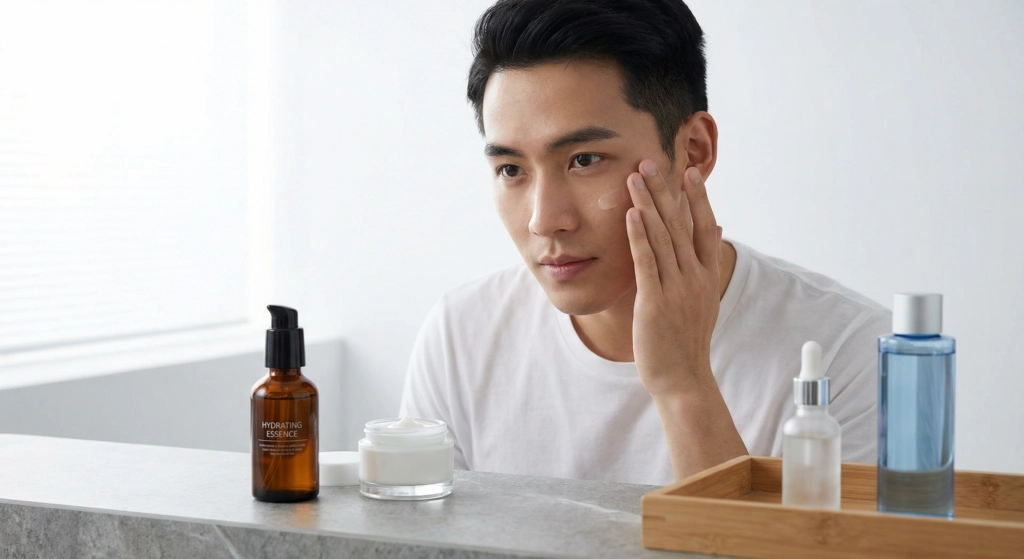
Anti-fatigue biotech serums and neurocosmetics
Neurocosmetics represent a $1,713.33 million market in 2024 and advance at 9.9% CAGR through 2030. Investors recognize the intersection of emotional wellness and skin health. These formulations target stress-related concerns through neuropeptides, adaptogens, and botanical extracts that interact with the skin’s sensory receptors and neurotransmitters. Biotherm Homme Force Supreme Reboot Shot exemplifies commercial application with 12% pure vitamin C, Biotech Plankton for barrier support, hyaluronic acid for hydration, and caffeine to reduce puffiness. Face care dominates revenue within neurocosmetics. Body care holds 23% and hair care captures 21% of the market share.
Male skin barrier function biotech companies
Skin repair market valuation reached $85 billion in 2024 and will hit $160.46 billion by 2034. The growth rate stands at 6.56% CAGR. Clinical protocols now assess barrier function restoration through standardized testing that measures transepidermal water loss and lipid layer integrity. Investors favor companies that develop ceramide-based systems and lipid-replacement technologies fine-tuned for male epidermal thickness specifically.
Non-sticky men’s formula design innovations
Male skin produces more sebum and sweat than female skin. Men just need non-greasy, non-shiny textures. Formulations must address irritation from shaving while maintaining lightweight absorption. This texture engineering has become a differentiation point as men reject products that leave residue.
Eco-conscious masculine luxury brands
&SOM launched in the UAE with 99.5% natural ingredients, including upcycled caffeine. The brand achieves sustainability through bioplastic tubes and tree-planting for each sale. Mens Skins positions vegan bakuchiol as a retinol alternative and combines ethical sourcing with anti-aging efficacy. Celebrity endorsement influence jumped to 6% of male consumers in 2024 from 3% in 2022, proving the premium positioning right.
First-party data in men’s skincare trends
AI-powered skin analysis tools, diagnostic scanners, and AR try-ons embed individual-specific experiences in retail. Brands gain proprietary consumer data that informs product development cycles.
Investment Risks and Long-Term Market Outlook
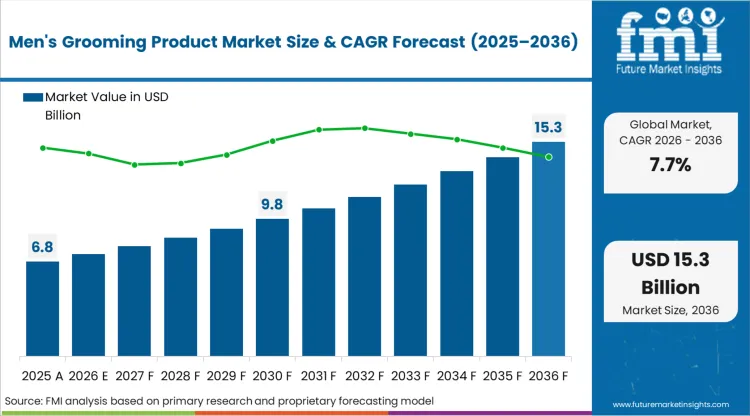
Image Source: Future Market Insights
Regulatory considerations for biotech actives
Biotech ingredients require the development of new safety testing protocols that current methodologies designed for traditional ingredients may not adequately address. Bio-engineered peptides claiming to reverse biological age need robust safety testing to ensure they don’t cause allergic reactions or long-term toxicity. Regulators just need new toxicological and dermal absorption studies, which substantially extend product development timelines and increase costs. There’s another reason for ingredient classification hurdles: microbiome formulations leveraging probiotics often straddle the line between cosmetics and therapeutic products. Misclassification delays approvals or guides to compliance issues, especially when you have strict boundaries between cosmetics and pharmaceuticals in certain regions. France will enforce PFAS bans in cosmetics starting January 2026, a move expected to influence global regulatory trends.
Consumer adoption rates and education barriers
About 61% of consumers remain unconvinced by biotech, with 27% declaring skepticism. But at the time consumers received the actual definition of biotechnology, global interest rose to 77%. Consumers become more open to trying these products once they are educated about the benefits. Cultural stigma toward male cosmetics in conservative regions hinders market growth despite this potential. Price sensitivity in emerging markets poses substantial challenges. Consumers in rural Indonesia and inland China opt for unbranded products over specialized cleansers.
Competitive landscape and differentiation challenges
Market structure remains divided between global conglomerates with extensive portfolios and independent specialty brands with limited distribution networks. Main competitive variables include brand recognition and retail placement quality rather than formulation innovation or ingredient quality differentiation. New entrants must distinguish themselves through product innovation, pricing strategies, or unique marketing approaches to capture market share.
Five-year growth projections
The men’s skincare products market stands at $19.2 billion in 2026 and will reach $52.1 billion by 2036, advancing at 10.5% CAGR. The rolling CAGR analysis reveals consistent growth from $19.2 billion to $35 billion between 2026-2031, then continuing to $52.1 billion by 2036.
Conclusion
Biotech in men’s care represents more than a market trend. It’s a $52 billion chance by 2036, built on measurable science. Biosynthetic peptides, PDRN regeneration, and microbiome-friendly formulations address male-specific skin characteristics and meet what Gen Z just needs: clean, effective ingredients.
Premiumization joins proven efficacy to create ideal conditions for investment. Is your brand ready to capture the multi-billion-dollar biotech men’s care market? Visit the homepage & submit your project brief via the form available, or chat with the experts regarding your ideas via WhatsApp/live chat to develop your custom men’s series today.
Key Takeaways
Smart investors are capitalizing on the biotech revolution in men’s care, where scientific innovation meets a rapidly expanding $52 billion market opportunity by 2036.
• Men’s grooming market will reach $67.70 billion by 2026, driven by Gen Z adoption rates jumping from 42% to 68% in facial skincare usage over just two years.
• Biotech innovations like biosynthetic peptides and PDRN deliver measurable results, with clinical studies showing 30% increased collagen production and 45% improved hydration in male skin.
• Investment flows target anti-fatigue serums and microbiome-friendly formulations, as neurocosmetics represent a $1.7 billion market growing at 9.9% CAGR through 2030.
• ODM/OEM partnerships enable rapid market entry with 8-12 week production timelines and access to custom formulations developed by CL Cosmetic Industries’ in-house R&D team specifically for men’s skincare needs, including cleansers, moisturizers, and all-in-one gel products.
• Regulatory hurdles and consumer education remain key risks, with 61% of consumers initially skeptical of biotech until properly educated about proven benefits and safety protocols.
The convergence of premiumization trends, scientific validation, and demographic shifts creates unprecedented opportunities for brands that integrate biotechnological innovation with sustainable manufacturing and targeted insights into male consumers.
FAQs
Q1. What biotech innovations are transforming men’s skincare in 2026? Key innovations include biosynthetic peptides that increase collagen production by 30%, PDRN from salmon DNA that improves skin hydration by 45%, plant-derived exosomes for hair density and skin regeneration, vegan collagen produced through fermentation technology, and microbiome-friendly formulations that balance skin bacteria. These technologies address male-specific skin characteristics like thicker epidermis and higher sebum production.
Q2. How large is the men’s grooming market expected to grow by 2026? The men’s grooming market is projected to reach between $65-67.70 billion globally by 2026, with the skincare segment alone valued at $19.1 billion. The market will continue expanding to $52.1 billion in skincare products by 2036, driven by Gen Z adoption rates that jumped from 42% to 68% in facial skincare usage and increasing demand for premium, science-backed formulations.
Q3. What are investors focusing on in the biotech men’s care sector? Investors are targeting anti-fatigue biotech serums and neurocosmetics (a $1.7 billion market growing at 9.9% annually), male skin barrier function technologies, non-sticky formula innovations, eco-conscious luxury brands using sustainable ingredients, and companies leveraging AI-powered personalization tools. The focus is on products that combine proven efficacy with clean ingredients and sustainable manufacturing.
Q4. What challenges do biotech men’s care products face in the market? Major challenges include regulatory hurdles that require new safety testing protocols for bioengineered ingredients, consumer skepticism (61% initially unconvinced by biotech claims), cultural stigma in conservative regions, and price sensitivity in emerging markets. However, consumer acceptance rises to 77% once properly educated about biotech benefits and safety.
Q5. How do ODM and OEM partnerships benefit men’s care brands? ODM and OEM partnerships with CL Cosmetic Industries provide access to comprehensive formulation services through their in-house R&D laboratory, GMP-certified and HALAL JAKIM-verified manufacturing facilities in Malaysia, and customizable skincare solutions with flexible production capabilities. These partnerships enable brands to enter the market with confidence, backed by a manufacturer with nearly 30 years of expertise that has collaborated with over 300 brands across Malaysia, Singapore, Hong Kong/China, Indonesia, and counting. CL Cosmetic Industries offers end-to-end support from concept development to filling and packaging, allowing brands to create high-quality skincare, body care, and men’s care products that meet international safety and efficacy standards without building their own production infrastructure.