
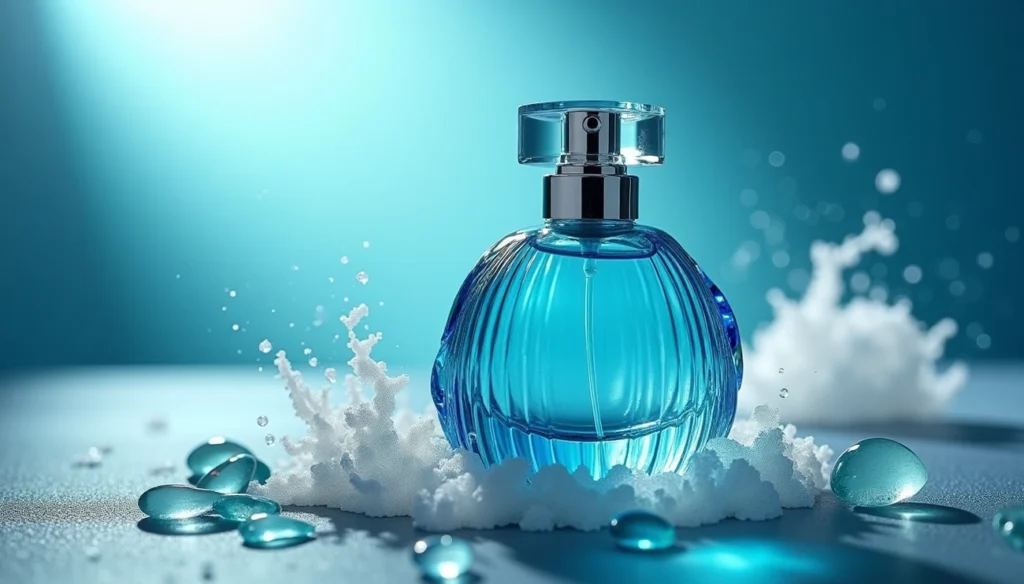
The beauty industry is moving a lot toward our oceans, aka the Blue Beauty Trends. The year 2026 brings us to a significant point where marine science meets mindful formulation. This isn’t just another passing trend. The Blue Beauty Trends movement shows how brands rethink their ingredient sourcing, product formulation, and packaging with ocean health in mind.
New product development using marine-derived ingredients jumped 43% since late 2025. This makes Blue Beauty one of the fastest-growing parts of the global cosmetics market. Beauty entrepreneurs need to understand these ocean-friendly breakthroughs to stay competitive in a market that cares more about our oceans.
Marine-Biotech Ingredients: The Power of Algae, Seaweed, and Spicules
Marine biotechnology has gone way past simple seaweed extracts. Modern formulas use advanced bioactive compounds that give amazing benefits. Brands should know that customers now look for these specific marine ingredients by name.
Algae stands out as the star of marine-derived actives. These tiny organisms can adapt to extreme environments, which makes them great for skincare when properly processed. The best varieties include:
- Blue spirulina (rich in phycocyanin) – Showed 71% lower inflammation markers in clinical studies
- Red microalgae (Porphyridium species) – Have unique polysaccharides that form a protective film and boost skin moisture by 32%
- Brown macroalgae (Laminaria digitata) – Gives exceptional protection against free radicals through fucoidan compounds
Marine spicules, tiny skeletal structures from sea sponges, lead the way in natural exfoliation technology. Unlike plastic microbeads that harm waterways, these silicon dioxide structures break down naturally while giving precise exfoliation. Smart brands already use these in their formulas.
Ocean-derived probiotics have improved a lot. Scientists found specific bacterial strains that help strengthen the skin’s natural barrier when applied. This opens up new possibilities in microbiome-friendly marine biotech that early adopters can use to stand out.
“The oceans contain approximately half of global biodiversity, yet we’ve only explored about 1% of marine species for cosmetic applications,” notes a recent report from the International Journal of Cosmetic Science. This untapped potential means we’ll see new ingredients for years ahead.
Made in Malaysia: How CL Cosmetic Industries Bridges Global Trends with Local Excellence
“AI and real-time personalization of products, like AI skin mapping and routines based on skin conditions, as well as smart mirrors and robotic makeup application, are on the rise.” — Sabina Wizemann, GH Beauty Lab Director at Good Housekeeping, skincare and tech expert
Malaysia has become a key hub where global beauty trends meet manufacturing excellence in Southeast Asia. Blue beauty innovations are growing worldwide, and Malaysian contract manufacturers help brand founders blend blue beauty principles into market-ready product lines. CL Cosmetic Industries bridges advanced marine science with practical production capabilities to turn your brand’s blue beauty dreams into reality.
Malaysian manufacturers excel in blue beauty trends because they combine two strengths: easy access to marine resources and technical know-how. Halal-certified private label manufacturers such as CL Cosmetic Industries get the first pick of eco-friendly marine ingredients that make up blue beauty formulations. Brands that work with Malaysian manufacturers get ahead in supply chain transparency – something consumers now expect.
“The Malaysian manufacturing sector has invested heavily in biopolymer processing facilities specifically calibrated for beauty packaging applications,” notes a CL Cosmetic Industries sustainability director. Malaysia’s expertise makes it a go-to manufacturing hub for brands looking for packaging solutions that match blue beauty values.
Halal-verified Malaysian OEMs (Original Equipment Manufacturers) such as CL Cosmetic Industries stand out through technical breakthroughs that solve the main issues in blue beauty formulation. These labs might have created new SPF technologies that mix lower amounts of non-nano zinc oxide with marine-derived antioxidants. This gives good sun protection that feels great on skin – fixing a common problem for brands wanting reef-safe SPF options.
Beauty entrepreneurs can future-proof their product lines with Halal private label manufacturers such as CL Cosmetic Industries through three key benefits:
- Marine Ingredient Expertise – Specialized knowledge in stabilizing delicate marine bioactives like algae polysaccharides and sea-derived prebiotics
- Sustainable Packaging Solutions – Capabilities for implementing regenerative packaging using materials like calcium carbonate from oyster shells
- Regulatory Navigation – Critical guidance through complex international regulations governing marine-derived ingredients
Halal-cerified Original Design Manufacturers(ODM), i.e., CL Cosmetic Industries, has invested heavily in testing protocols that back up blue beauty claims – vital as regulations get stricter. They test marine ingredient effectiveness in-house and work with independent labs to get clinical data that smart consumers want.
Brand founders should know that science-backed claims are now basic requirements for blue beauty credibility. Competent Malaysian private label manufacturers, e.g., CL Cosmetic Industries has created or plan to create special testing protocols for marine-derived actives. These measures both evaluate how well they work and their environmental effects throughout the product’s life.
Initial small-batch production at CL Cosmetic Industries can let brand founders test blue beauty ideas without big inventory risks. This works great with new marine ingredients, where consumer response might be hard to predict. Their modular setup might handle waterless beauty formulas too, using special equipment for mixing powders and anhydrous processing.
Decades-old private label manufacturers such as CL Cosmetic Industries excel at working with blue beauty trends’ trickiest ingredients. They commonly work with spicules – tiny structures from marine sponges that provide natural exfoliation. These need careful processing to stay intact while spreading evenly in formulas – something many manufacturers don’t deal very well with.
Malaysian manufacturing combines expert knowledge with scalable production. Beauty entrepreneurs can bring blue beauty products to market faster while keeping their promises about marine conservation.
Blue beauty trends appeal to all gender identities, matching CL Cosmetic Industries’ universal approach to product development. Their experts create products that appeal to everyone, using 2026’s key blue beauty colors without old-fashioned gender stereotypes.
Brand founders can easily tap into Malaysian manufacturing expertise to improve their blue beauty lines. Just fill out the project form on clcosmetic.com or WhatsApp an expert through the homepage. CL Cosmetic Industries’ technical team can turn blue beauty concepts into real manufacturing plans – creating products that work well and stay eco-friendly.
Conclusion: Future-Proofing Your Brand for the Blue Beauty Era
The Blue Beauty Trends movement represents a radical alteration, not just another passing trend. Marine-derived ingredients, reef-safe formulations, and regenerative packaging solutions are at the vanguard of state-of-the-art beauty for 2026 and beyond. Beauty entrepreneurs who welcome these developments early will strengthen their market position substantially in an ocean-conscious marketplace.
Scientific validation is the most crucial factor for your brand’s credibility and consumer trust. You must support any marine-related claims with third-party certification and complete clinical data. Today’s consumers expect total transparency in results, methods, and sourcing practices. Your brand’s long-term success depends on partnerships with laboratories that can validate these claims.
Malaysian manufacturing expertise through CL Cosmetic Industries gives beauty founders a clear advantage in developing blue beauty trends’ product lines. Their knowledge of marine bioactives and environmentally responsible packaging helps brands turn ocean-inspired concepts into market-ready products. Their technical breakthroughs solve core formulation challenges while delivering the sensory experiences consumers just need.
Beauty entrepreneurs should know that winning brands will combine ocean conservation principles with high-performance products in this evolving category. You can submit your project brief via the form on clcosmetic.com or WhatsApp an expert for guidance through the homepage 🙂
The blue beauty trends movement needs more than surface-level commitments. Brands that combine marine science with environmentally responsible practices will succeed, while those making unsupported claims will lose consumer trust quickly. You have a chance to create products that draw inspiration from our oceans and contribute to their preservation, a compelling proposition for today’s environmentally conscious beauty consumer.
Key Takeaways
Blue Beauty represents a fundamental shift toward marine-conscious innovation that’s reshaping the beauty industry for 2026 and beyond, with marine-derived ingredients seeing a 43% increase in new product development.
• Marine biotech ingredients like blue spirulina and sea sponge spicules deliver superior performance while replacing harmful synthetic alternatives
• Reef-safe SPF formulation remains challenging, but breakthrough hybrid technologies now combine zinc oxide with marine antioxidants for elegant protection
• Regenerative packaging using ocean waste and algae-based bioplastics creates a net-positive environmental impact beyond simple plastic-free solutions
• Scientific validation through third-party certification and clinical transparency has become non-negotiable for building consumer trust in marine beauty claims
• Malaysian manufacturing expertise, particularly through specialized facilities, offers brands strategic advantages in sourcing, formulation, and sustainable packaging implementation
The most successful blue beauty brands will authentically integrate marine science with measurable environmental commitments, moving beyond performative sustainability to create products that actively contribute to ocean preservation while delivering exceptional consumer experiences.
FAQs
Q1. What are the key ingredients driving the Blue Beauty trend in 2026? Marine-derived ingredients like blue spirulina, red microalgae, and brown macroalgae are at the forefront of Blue Beauty. These ingredients offer powerful skincare benefits, including inflammation reduction, moisture retention, and free-radical protection.
Q2. How are beauty brands addressing the challenge of reef-safe sunscreens? Brands are developing hybrid formulations that combine lower concentrations of non-nano zinc oxide with marine-derived antioxidants. This approach provides effective UV protection while maintaining a pleasant application experience and minimizing environmental impact.
Q3. What innovations are happening in sustainable beauty packaging? The focus has shifted to regenerative packaging solutions that actively benefit marine ecosystems. Examples include containers made from recycled ocean waste, calcium carbonate derived from oyster shells, and algae-based bioplastics that biodegrade harmlessly in marine environments.
Q4. How important is scientific validation for Blue Beauty products? Scientific validation has become crucial for building consumer trust. Brands are now expected to provide comprehensive transparency, including full methodologies, sample sizes, and statistical significance of their claims. Third-party certifications and blockchain technology for ingredient tracing are also becoming standard practices.
Q5. What color trends are dominating the Blue Beauty aesthetic in 2026? The 2026 Blue Beauty color palette is inspired by marine environments, featuring three key hues: Deep Reef Blue (a rich, saturated cobalt), Phytoplankton Green-Blue (a multidimensional teal), and Abyssal Gray-Blue (a complex, smoky blue). These colors are being incorporated into product formulations, packaging design, and digital interfaces.