
Exosomes are being called “microneedling in a bottle” on TikTok, but the science behind these microscopic cellular messengers is far more compelling than social media hype. Recent studies show impressive results: 87.3% of participants reported improvement in facial skin aging, while another found 100% saw more glowing skin in just 4 weeks. These tiny vesicles make cellular communication easier and deliver bioactive molecules, which is why exosomes in skincare are gaining serious attention from researchers studying skin barrier repair and collagen synthesis pathways. I’ll break down the real regenerative skincare science behind premium exosome serums and what separates legitimate products from marketing fluff in this piece.
What Are Exosomes and How Do They Work in Skin
Cellular Communication and Extracellular Vesicles
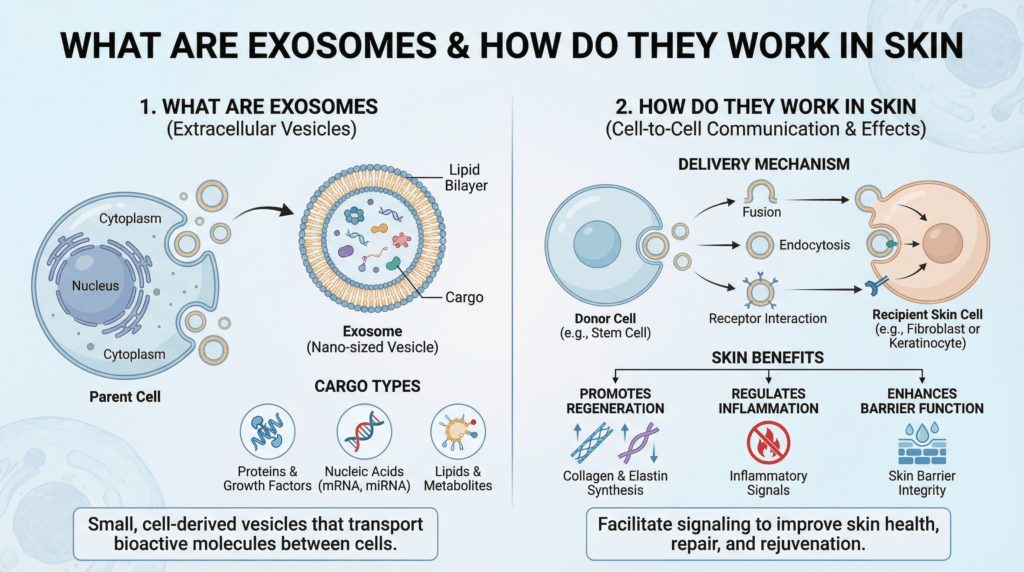
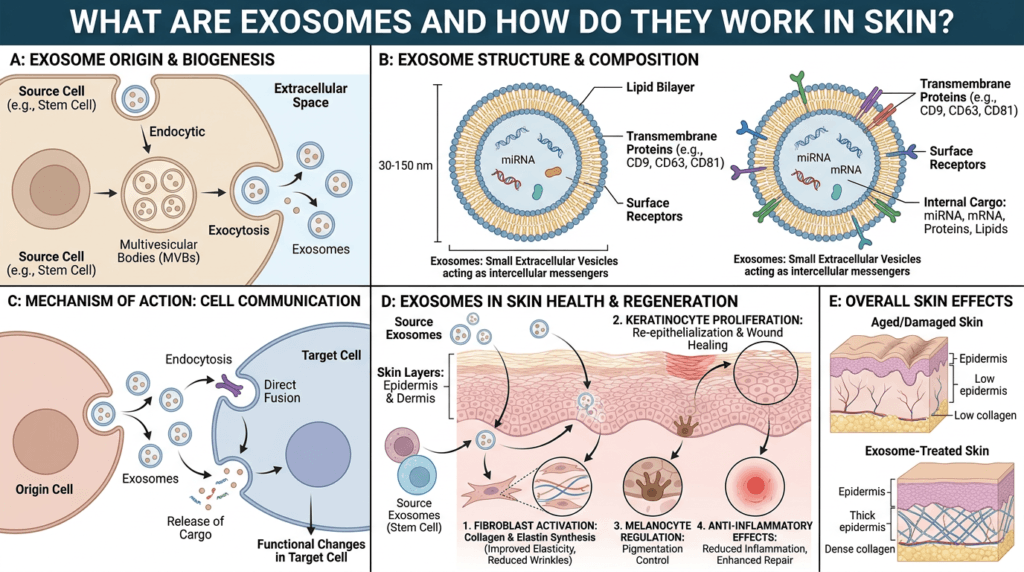
Exosomes are nano-sized extracellular vesicles (EVs) ranging from 30 to 150 nanometers in diameter [1]. Nearly all cell types secrete these membrane-bound structures as part of normal biological function. They represent one subtype within a broader family of EVs that has microvesicles (100-1000 nm) and apoptotic bodies (500-5000 nm) [2].
The formation process begins through the endosomal pathway. Cell membranes invaginate inward and create early endosomes that mature into late endosomes. These late endosomal membranes continue budding inward to form multivesicular bodies (MVBs) containing intraluminal vesicles [1]. MVBs either fuse with lysosomes for degradation or transport to the plasma membrane. MVBs fuse with the cell surface and release their intraluminal vesicles into the extracellular environment as exosomes [2].
Exosomes function as biological messengers between cells. They carry molecular instructions from donor cells to recipient cells and regulate cellular activities without requiring direct cell contact. This communication pathway governs processes like wound healing, collagen remodeling, and inflammatory responses in skin [2].
Bioactive Molecules Inside Exosomes
The regenerative potential of exosomes stems from their cargo of bioactive molecules. These vesicles contain two main categories of functional components:
- Proteins and Lipids: Tetraspanins (CD9, CD63, CD81), heat shock proteins (HSP70, HSP90), cytoskeletal proteins (actin, tubulin), and cell-specific proteins depending on the source [1]. Lipids like cholesterol, phosphatidylcholine, phosphatidylserine, sphingomyelin, and ceramide contribute to vesicle stability and cellular uptake [3]
- Nucleic acids: microRNA (miRNA), messenger RNA (mRNA), long non-coding RNA, and DNA fragments that can modify gene expression in recipient cells [1]
Exosomes derived from mesenchymal stem cells carry concentrated payloads of growth factors and signaling molecules associated with tissue regeneration [2]. Plant-derived exosomes (PDEs) contain stress-responsive proteins, antioxidants, and cross-species regulatory miRNAs that can influence human cellular functions [3].
The protein markers serve dual purposes, especially tetraspanins. They make cargo sorting easier during exosome formation and enable the identification of authentic exosomes in formulations [1].
How Exosomes Deliver Regenerative Signals
Exosomes reach target cells through distinct mechanisms. They can merge with the cell membrane and release their contents into the cytoplasm directly. Exosomal surface proteins interact with cell surface receptors to trigger signaling cascades as an alternative. The other pathway involves endocytic uptake, where recipient cells engulf the entire exosome [1].
Exosomal cargo regulates cellular behavior at multiple levels once internalized. The nucleic acids can alter gene expression patterns while proteins activate specific signaling pathways and lipids influence membrane dynamics [3].
Exosomes from different sources produce targeted effects in skin applications. Keratinocyte-derived exosomes regulate melanocyte pigmentation [4]. Adipose mesenchymal stem cell exosomes promote scarless repair by regulating extracellular matrix remodeling [4]. Umbilical cord blood exosomes accelerate wound healing through miR-21-3p-mediated promotion of angiogenesis and fibroblast function [4].
Exosomes also regulate inflammatory pathways like NF-κB and IL-17/IL-23. They activate the NRF2 pathway to reduce oxidative stress and regulate TGF-β/Smad signaling to minimize pathological scarring [2]. This multi-pathway regulation explains why exosome therapy shows lower risks of tumorigenicity and immunogenicity compared to direct stem cell applications [1].
The Science Behind Premium Exosome Serums
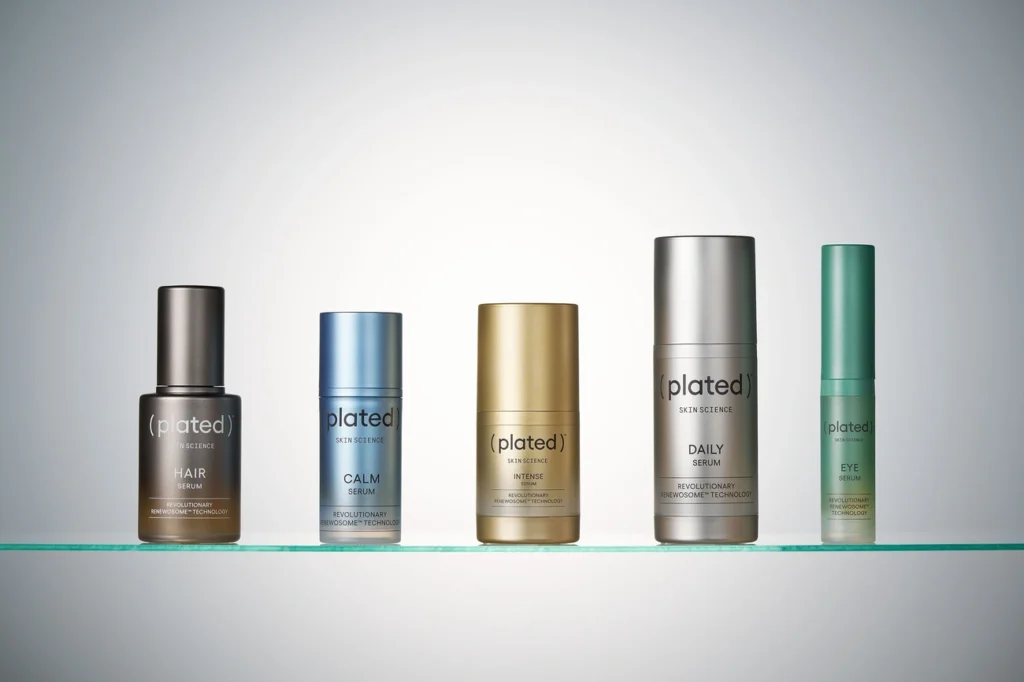
Image Source: ( plated )® Skin Science
Mesenchymal Stem Cell (MSC) Exosomes vs Plant-Derived
The source of exosomes determines their regenerative potential. Human mesenchymal stem cell exosomes come from umbilical cord, adipose tissue, or bone marrow and contain growth factors like TGF-β, HGF, EGF, FGF-2, and IGF-1 [3]. These human-specific signaling molecules communicate with skin cells because they share the same cellular language. MSC exosomes stimulate collagen type I and elastin production, modulate inflammation, and support extracellular matrix remodeling [3][5].
Plant-derived exosomes come from sources like Centella asiatica, ginger, grapefruit, and grape [3][6]. Ginger exosomes contain bioactive components, including 6-gingerol and 6-shogaol with anti-oxidative and anti-inflammatory activities [6]. Plant exosomes offer antioxidant protection and vegan-friendly formulations but demonstrate limited regenerative capability compared to human-derived versions [3][2]. The biological differences between plant and human cells restrict cross-species cellular signaling effectiveness.
Human MSC exosomes are thought of as the gold standard for skin regeneration [3]. Plant-derived options serve foundational skincare needs like barrier support and nourishment without the same depth of cellular repair [3][2].
Growth Factor vs. Exosomes: Understanding the Difference
Growth factors function as single protein-based signals that bind to cell receptors and prompt specific actions, such as producing collagen [7]. They stimulate collagen production and accelerate wound healing [8].
Exosomes operate differently. They act as packages containing multiple signals, including growth factors, peptides, lipids, RNA, and other molecular instructions [7][9]. A single exosome carries hundreds to thousands of unique material combinations that reflect its parent cell’s identity [5]. This concentrated array of signaling molecules stimulates multiple regenerative pathways at once [10].
Research shows exosomes improve collagen I and III production, promote angiogenesis, and accelerate epidermal healing more than growth factors alone [10]. Their multi-faceted signaling capacity provides sustained regenerative effects [10]. Growth factors excel at post-procedure healing and addressing aging skin concerns [8]. Exosomes prove effective for inflammatory conditions, pigmentation issues, and detailed skin barrier repair [8].
Advanced Delivery Systems and Nanotechnology
Loading therapeutic cargo into exosomes requires specialized techniques. The two main approaches are exogenous drug loading (adding cargo after isolation) and endogenous loading (engineering parent cells to produce cargo-loaded exosomes) [6].
Methods include incubation, electroporation, sonication, extrusion, freeze-thaw cycles, and hypotonic dialysis [6][9]. The NanoGlow technique addresses peptide delivery challenges by encapsulating cosmetic peptides into plant-derived exosomes through chemical activation and physical pre-encapsulation [11]. This approach improves peptide penetration by a lot compared to free peptides and proves suitable for large-scale production [11].
Microfluidic platforms offer high-precision processing for exosome modification [12]. Surface functionalization can be achieved through endogenous or exogenous strategies to improve barrier permeability and cell-specific targeting [12].
Manufacturing Standards That Define Premium Quality
Good Manufacturing Practice (GMP) standards separate premium products from questionable formulations. Five cell types meet GMP criteria for exosome production: human cardiac progenitor cells, bone marrow MSCs, adipose tissue-derived stem cells, monocyte-derived dendritic cells, and HEK293 cells [5].
Isolation methods affect purity and yield. Tangential flow filtration (TFF) achieves higher recovery and batch-to-batch consistency than ultracentrifugation [3][2]. Anion exchange chromatography provides scalable purification with high purity [3].
Quality control markers include tetraspanins CD9, CD63, and CD81, detected through flow cytometry [5][5]. Particle size analysis uses nanoparticle tracking analysis (NTA) to confirm vesicles fall within the 30-150 nm range [5]. Sterility testing, mycoplasma detection, and endotoxin screening ensure safety [5]. Transmission electron microscopy verifies cup-shaped morphology [5]. Exosome quality varies without standardized protocols and affects therapeutic outcomes [3][12].
Clinical Evidence: What Research Actually Shows
Research on exosome efficacy in skin applications reveals specific molecular mechanisms and measurable clinical outcomes. Studies show how these vesicles activate regenerative pathways and produce quantifiable improvements in skin parameters.
Collagen Synthesis Pathways and Dermal Fibroblast Activation
MSC exosomes activate multiple signaling pathways that drive collagen production. They trigger phosphatidylinositol 3-kinase/protein kinase B (PI3K/AKT), extracellular signal-regulated kinase cascade (ERK), and Wnt/β-catenin pathways, then promote re-epithelialization through cell proliferation and migration [13]. The transforming growth factor-beta (TGF-β) pathway plays a central role in fibroblast migration and extracellular matrix protein synthesis [14].
Human umbilical cord MSC exosomes increased type I collagen production while decreasing matrix metalloproteinase-1 (MMP-1) levels in irradiated fibroblasts [14]. Adipose-derived stem cell exosomes boosted type I collagen expression and suppressed senescence-associated proteins p53 and p21 [14]. Five studies confirmed that exosome-treated wounds showed accelerated healing and re-epithelialization rates compared with controls [2].
Skin Barrier Repair and Cellular Repair Mechanisms
Exosomes support barrier function through anti-inflammatory cargo that reduces chronic low-grade inflammation, compromising barrier integrity [9]. Growth factors within exosomes stimulate the production of ceramides and cholesterol that form the skin’s protective barrier [9]. On top of that, exosomes boost production of structural proteins like filaggrin and involucrin that maintain barrier cohesion [9].
Subcutaneous injection of adipose-derived stem cell exosomes promoted epidermal barrier repair in an atopic dermatitis mouse model. The treatment boosted stratum corneum hydration, decreased inflammatory cytokines (IL-4, IL-5, IL-13, IL-17, IFN-γ, TNF-α, and TSLP), and stimulated epidermal ceramide production [15]. Dermal fibroblast-derived exosomes restored expression levels of skin permeability barrier maintenance biomarkers in treated keratinocytes, including FLG, LOR, IVL, and HAS1 [15].
Exosome Stability in Formulations
MSC exosomes isolated from breast milk showed stability for around 90 days. This compares to other biomolecules like neutrophils, which have a life expectancy of about 16 hours [13]. This extended stability makes exosomes especially good for topical formulations requiring shelf life.
Topical Exosome Efficacy Studies
Clinical studies measuring facial rejuvenation and photoaging showed improvements in hydration, elasticity, wrinkle measurements, pore measurements, and skin texture over 2-12 week follow-up periods [16]. Studies showed that exosome-based therapies improve skin elasticity by a lot, reduce wrinkle depth, boost hydration, and modulate pigmentation [17]. Three studies found increased collagen deposition in exosome-treated wounds, with one study finding improved collagen arrangement [2]. Most clinical trials reported no severe adverse effects, only temporary local reactions like erythema, edema, or mild discomfort [8].
How to Identify Professional Grade Serums

Key Ingredients in Premium Formulations
Professional-grade serums disclose specific exosome sources and concentrations. Quality formulations specify whether exosomes derive from plant sources like rose, goji berry, or Centella asiatica, with products containing up to 4 billion plant-derived exosomes per dose [7]. Premium serums combine exosomes with complementary bioactive molecules, including growth factors, coenzyme NAD+, hyaluronic acid, peptides, and ectoin [7][10]. These supporting ingredients work together to address repair and hydration while providing structural support.
Source transparency separates legitimate products from questionable formulations. A brand that labels its product “exosome technology” without specifying the cellular origin or extraction method raises a red flag [10][18].
Concentration and Potency Markers
Therapeutic concentrations require verification through particle counts measured in particles per milliliter [18]. High-quality formulations provide 50,000 active signaling molecules [18], while some premium products contain over a trillion exosomes per bottle [19]. Professional-grade serums maintain a particle-to-protein ratio above 1×10^9. This indicates fewer contaminants and higher purity [20].
Concentration claims mean nothing without third-party verification. Many products exaggerate exosome content or contain fragmented vesicles that lack bioactivity [21].
Storage Requirements and Product Stability
Exosome stability in formulations depends on storage conditions. Research shows that storage at temperatures below -70°C preserves exosome integrity. Room temperature storage reduces protein and RNA content by a lot [22]. Products stored at 4°C and room temperature experience major loss of the exosomal marker CD63 [22]. The exosome-associated proteins degrade within 30 minutes when incubated at 90°C [22].
These stability challenges make product packaging and storage instructions worth a close look. Serums that require refrigeration or feature specialized stabilization technology protect exosome bioactivity better than conventional formulations.
Third-Party Testing and Quality Certifications
Independent testing reveals widespread fraud in the exosome market. The EXACT oversight bureau tested about 99% of American-based exosome products and found shocking results regarding exosome presence and bioactivity [23]. Legitimate manufacturers verify their products using Nanosight300 tests to confirm nanoscale particles exist and transmission electron microscopy to verify intact bilipid membranes. They also use proteomics, genomics, and lipidomics analysis [23].
Request Certificates of Analysis that document sterility, endotoxin levels, and viral transmission testing [24]. Products that lack these certifications probably cut corners on quality control.
Price Points That Reflect Real Quality
Premium exosome serums command high prices. Plant-derived formulations range from about IDR 317,102 to IDR 792,755 [10], while human-derived options cost IDR 2,378,267 to IDR 4,756,534+ per bottle in Indonesia [10]. Professional treatments in the UK range from £200 to £600 per session [25].
Products claiming exosome content at low prices often lack scientific backing or proof of intact exosomes [3]. Very high prices don’t guarantee superior results either. You should assess cost against verified concentration, source quality, and clinical evidence rather than marketing claims alone.
Using Exosome Serums Safely and Effectively
Application Methods for Best Results
Apply exosome serums after cleansing and before heavier creams or oils. This allows the lightweight formulations to penetrate well [5]. You can use exosomes morning or evening, based on the specific product, though twice-daily application produces optimal results for most users [26].
Apply to damp skin using gentle pressing motions rather than rubbing for increased absorption. Rubbing can damage the delicate vesicles [26]. Allow 2-3 minutes for complete absorption before layering additional products [26]. Improvements in hydration and texture appear within 2-4 weeks. Firmness and reduced fine lines become visible after 6-8 weeks of consistent use [5].
Combining with Other Active Ingredients
Exosomes work cooperatively with hyaluronic acid, ceramides, niacinamide and antioxidants [5]. You can pair them with vitamin C in the morning for antioxidant protection or with retinol at night to support collagen production [5]. Clinical studies show exosomes boost retinol results by 51% when used together [6].
Don’t layer harsh exfoliants or high-strength acids right after application to maintain exosome stability [5]. Start slow when combining with strong actives and monitor your skin’s response [26].
Potential Risks and Contraindications
Topical exosome serums cause minimal side effects. Clinical trials report temporary redness, swelling, or tingling in fewer than 5% of users. These resolve within 24-48 hours [9]. Plant-derived exosomes are well-tolerated even by sensitive skin [12].
Don’t use exosome therapy if you’re pregnant, breastfeeding, have active skin infections, autoimmune conditions, a cancer history, or have used Roaccutane within the past six months [11]. Intradermal injection of cosmetic exosome formulations has caused severe inflammatory reactions, persistent nodules, and granulomatous inflammation requiring extensive medical intervention, though it remains off-label in many countries [27]. Stick to topical application as intended.
Conclusion
Exosome serums represent a scientific advancement in regenerative skincare, with clinical evidence supporting their collagen-boosting and barrier-repairing capabilities. But given that approximately 99% of products fail quality verification, your main challenge isn’t choosing between brands but identifying authentic formulations.
You just need third-party testing certificates and verified particle counts with transparent source disclosure before investing in exosome serums. Quality products aren’t cheap, but the alternative is paying top dollar for formulations that don’t work.
Start with proven MSC-derived options from GMP-certified manufacturers. Your skin deserves the science, not just the marketing hype surrounding this technology.
Don’t settle for marketing buzz, choose the science of skin health! Reach out to the CL Cosmetic Industries’ team of experts now regarding how to develop your exosome serums or exosome-related skincare series & experience the breakthrough in cellular communication!
Key Takeaways
Understanding the real science behind exosomes helps you navigate premium skincare claims and make informed purchasing decisions based on clinical evidence rather than marketing hype.
• Exosomes are nano-sized cellular messengers that deliver growth factors, proteins, and RNA to stimulate collagen production and skin barrier repair through natural biological pathways.
• Human MSC-derived exosomes outperform plant-derived versions for regenerative effects, containing species-specific growth factors that communicate directly with skin cells.
• Approximately 99% of exosome products fail quality verification – demand third-party testing certificates, verified particle counts, and GMP manufacturing standards before purchasing.
• Clinical studies show 87% improvement in facial aging with proper exosome formulations, but results require 6-8 weeks of consistent use for visible firmness and fine line reduction.
• Premium authentic exosome serums cost $150-$300+ due to complex manufacturing requirements – extremely cheap products likely lack active exosomes or contain degraded vesicles.
The exosome skincare market is flooded with fraudulent products, making source verification and manufacturing transparency more critical than brand reputation when selecting effective formulations.
FAQs
Q1. What exactly are exosomes, and how do they work in skincare products? Exosomes are nano-sized vesicles (30-150 nanometers) that act as cellular messengers, carrying bioactive molecules like proteins, growth factors, lipids, and RNA between cells. In skincare, they deliver regenerative signals that stimulate collagen production, activate dermal fibroblasts, and support skin barrier repair by communicating directly with skin cells through multiple pathways.
Q2. Are human-derived exosomes better than plant-derived exosomes for anti-aging? Yes, human mesenchymal stem cell (MSC) exosomes are considered the gold standard for skin regeneration. They contain species-specific growth factors like TGF-β, EGF, and FGF-2 that communicate directly with human skin cells, stimulating collagen and elastin production more effectively. Plant-derived exosomes offer antioxidant benefits and barrier support but have limited regenerative capability due to biological differences between plant and human cells.
Q3. How can I tell if an exosome serum is actually legitimate and high-quality? Look for products with third-party testing certificates, verified particle counts (measured in particles per milliliter), transparent source disclosure, and GMP manufacturing standards. Quality serums should specify the exosome source, contain at least 50,000 active signaling molecules, and provide Certificates of Analysis documenting sterility and purity. Be wary that approximately 99% of exosome products fail quality verification testing.
Q4. How long does it take to see results from exosome serums? Initial improvements in hydration and skin texture typically appear within 2-4 weeks of consistent use. More significant results, like increased firmness and reduced fine lines, become visible after 6-8 weeks. Clinical studies show that 87% of participants reported improvement in facial aging, with optimal results requiring twice-daily application and proper layering with complementary ingredients.
Q5. Are there any safety concerns or side effects when using exosome serums? Topical exosome serums are generally safe, with clinical trials reporting minimal side effects, temporary redness, swelling, or tingling in fewer than 5% of users, typically resolving within 24-48 hours. However, avoid use if you’re pregnant, breastfeeding, have active skin infections, autoimmune conditions, or cancer history. Stick to topical application only, as intradermal injections have caused severe inflammatory reactions in some cases.
References
[1] – https://pmc.ncbi.nlm.nih.gov/articles/PMC10785444/
[2] – https://pmc.ncbi.nlm.nih.gov/articles/PMC11023079/
[3] – https://platedskinscience.com/blogs/plated-skin-science-blog/exosome-skincare-101-benefits-side-effects-and-how-to-choose-the-best-exosome-serum?srsltid=AfmBOoqrlUmgEon_P_lW76ttn6CDQm5pMMJ55wj17euZ0w6ot9SL-lcT
[4] – https://www.mdpi.com/2079-9284/12/1/16
[5] – https://www.medik8.com/pages/how-to-use-exosomes-in-skincare?srsltid=AfmBOop_MSrFJz16hOa9UcK_VYEWFo3u7l01DjzF4LL-bWDCOE_DpMaB
[6] – https://uk.theinkeylist.com/blogs/news/boost-your-retinol-results-with-exosome?srsltid=AfmBOoopxxrv4F584k40DTwsAejReAzghwoo8odXjzI1JAPWnuCq6j4T
[7] – https://shop.dermapure.com/products/exosome-serum?srsltid=AfmBOooMM2AguIAjuSGwJdcWzSWnfe9ZE1mFu5V1YTH5VLCJGUK1r7PH
[8] – https://www.cureus.com/articles/467420-efficacy-of-exosome-based-therapies-for-skin-rejuvenation-a-systematic-review-of-human-studies
[9] – https://salisburyps.com/exosome-serums-in-medical-skincare-clinical-evidence-fda-status-and-what-patients-need-to-know-in-2025/
[10] – https://www.breezeandbe.com/blogs/skin-lab/the-complete-guide-to-exosome-skincare-what-your-skin-has-been-missing
[11] – https://www.exosomestherapy.co.uk/what-are-the-contraindications-for-exosome
[12] – https://www.medik8.com/pages/everything-you-need-to-know-about-exosomes-in-skincare?srsltid=AfmBOopZCfOwr62Q7CAmtojgp2JKb1pnnDE9YxiwV-5pGioAKcvv2nRR
[13] – https://pmc.ncbi.nlm.nih.gov/articles/PMC10296902/
[14] – https://pmc.ncbi.nlm.nih.gov/articles/PMC12395928/
[15] – https://pmc.ncbi.nlm.nih.gov/articles/PMC10929203/
[16] – https://www.cureus.com/articles/467420-efficacy-of-exosome-based-therapies-for-skin-rejuvenation-a-systematic-review-of-human-studies.pdf
[17] – https://dpcj.org/index.php/dpc/article/view/6462
[18] – https://uk.theinkeylist.com/blogs/news/exosomes-in-skincare-everything-you-need-to-know?srsltid=AfmBOooJ-CJgBG0Gxlrdt9eIg_hIhTNpYaMaemEzoRlDyfjD2-H8lMdT
[19] – https://medium.com/@samelak/best-exosome-serums-in-2025-i-tested-the-top-3-so-you-dont-have-to-fe2a6e082f59
[20] – https://www.drpagkalos.com/exosomes-guide/
[21] – https://www.threeshipsbeauty.ca/blogs/exosomes/exosomes-in-skincare?srsltid=AfmBOoquZdiqaJLLy1efhA2B4rNT8nyCgwYmChbUZC_YK6xqB-2JS6r-
[22] – https://link.springer.com/article/10.1007/s12257-015-0781-x
[23] – https://www.linkedin.com/pulse/topical-exosome-products-spark-safety-regulatory-michael-moretti-3ailc
[24] – https://www.thepmfajournal.com/features/features/post/what-to-look-for-in-new-exosome-products-a-guide-to-the-exosome-cosmetic-market
[25] – https://www.cosmopolitan.com/uk/beauty-hair/skincare/a64562722/exosome-skincare/
[26] – https://uk.theinkeylist.com/blogs/news/exosomes-in-skincare-everything-you-need-to-know?srsltid=AfmBOor-001vqEWGq4fPszaA1KNOmU8IFBajJsdpvMDuuQnnewvKPCKj
[27] – https://pmc.ncbi.nlm.nih.gov/articles/PMC12528963/